
Argonath
Estatuas de Isildur y Anárion
El Argonath, también conocido como los Pilares de los Reyes o la Puerta de los Reyes, era un punto de referencia situado en el extremo norte de Gondor.
Descripción
El Argonath estaba formado por dos enormes pilares de roca, tallados a semejanza de Isildur y Anárion, orientados hacia el norte. Colocadas sobre enormes pedestales, cada una de las dos figuras sostenía un hacha en la mano derecha y levantaba la mano izquierda en un gesto de desafío hacia los enemigos de Gondor. Las dos estatuas se alzaban a ambos lados del río Anduin. Un estrecho paso entre ellas conducía a un largo y oscuro abismo con altos acantilados escarpados que desembocaba en el lago Nen Hithoel.
Historia
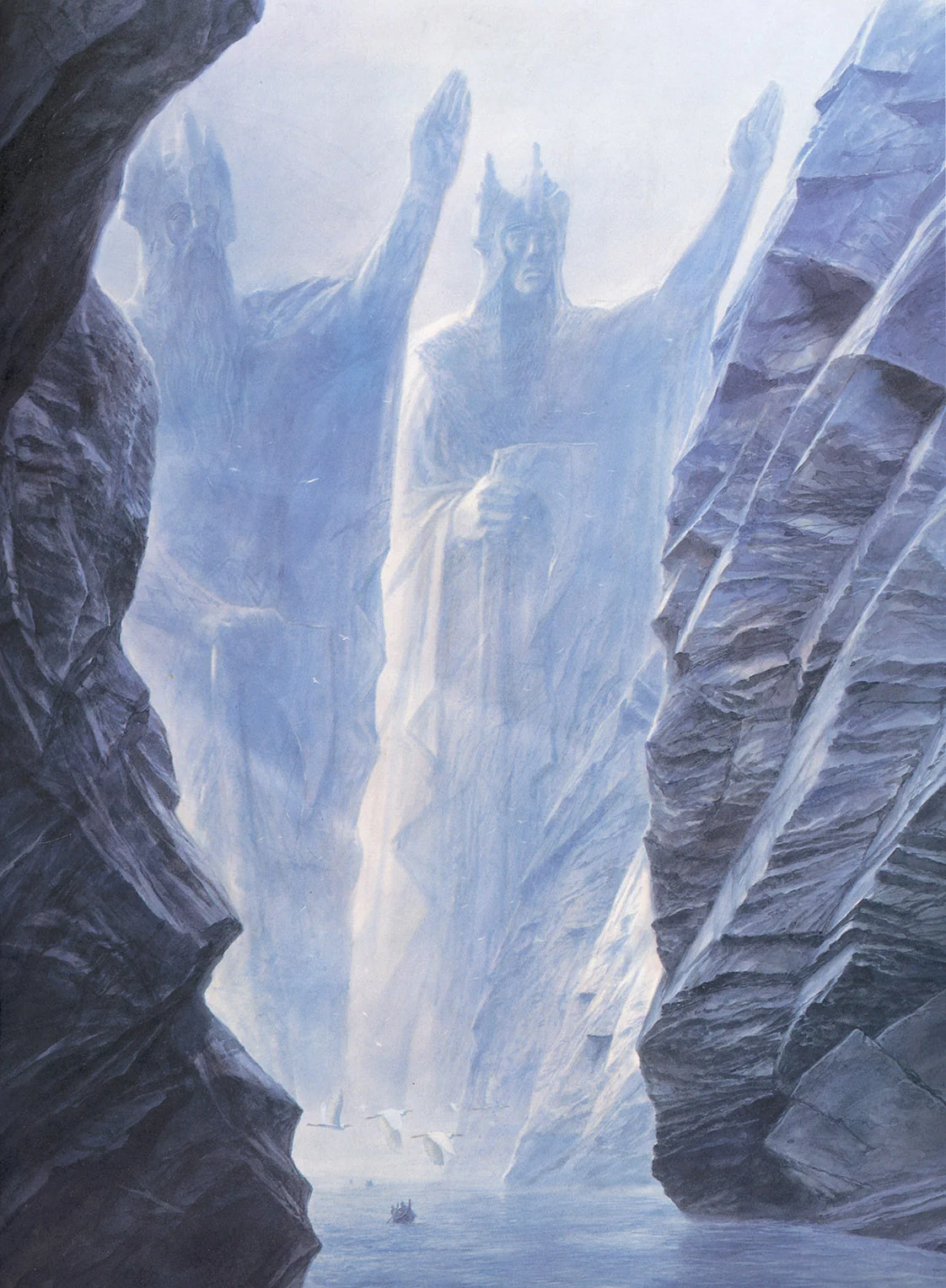
Cuando los Orientales atacaron a los Hombres del Norte que se habían asentado al sur del Gran Bosque Verde, Minalcar, sobrino del rey Narmacil I y regente de Gondor, lideró un gran ejército que derrotó a los Orientales entre Rhovanion y el Mar de Rhûn en el año 1248 de la Tercera Edad. A su regreso, fortificó los bancos orientales del Anduin y construyó los pilares del Argonath.
En la época de la Guerra del Anillo, el Argonath y el Emyn Muil, junto con Amon Hen —con su Sitial de la Vista— y Amon Lhaw, la Colina del Oído, seguían formando parte de Gondor, pero la zona estaba desierta.
El 25 de febrero del año 3019 de la Tercera Edad, la Comunidad del Anillo remó río abajo por el Anduin entre los Pilares de los Reyes en su viaje hacia el sur. El paso del tiempo había nublado sus ojos y surcado sus frentes, pero ambas figuras seguían irradiando poder y majestad.
Etimología
Argonath es un nombre en Sindarin que significa «piedras reales», «par de piedras reales» o «el conjunto de (dos) piedras nobles». Es un compuesto de Ar(a) (un prefijo que expresa realeza) y la forma abreviada gon («piedra», utilizada para objetos más pequeños hechos de piedra, especialmente figuras talladas) de gond y -ath (un plural colectivo o de grupo, ya que el Argonath era un par de estatuas). Una variante válida del nombre en forma dual era «Argonad».
Otras versiones del legendarium
En unas notas escritas a lápiz para lo que más tarde se convertiría en el capítulo «El Río Grande», J. R. R. Tolkien utilizó primero el nombre Sern Erain y luego el de Sarn Aran, que tradujo como «Piedras de los Reyes».
Inspiración
J. R. R. Tolkien escribió en una carta que los Númenóreanos de Gondor se parecían a los egipcios en muchos aspectos, entre ellos su amor por lo gigantesco y macizo, así como su habilidad para construirlo, y su interés por la ascendencia y las Tumbas. Wayne G. Hammond y Christina Scull señalaron que el Argonath recuerda a las antiguas estatuas egipcias, como las dos gigantescas estatuas de Memnón en el Templo funerario de Amenofis III.
Representación en las adaptaciones
El Argonath en las adaptaciones
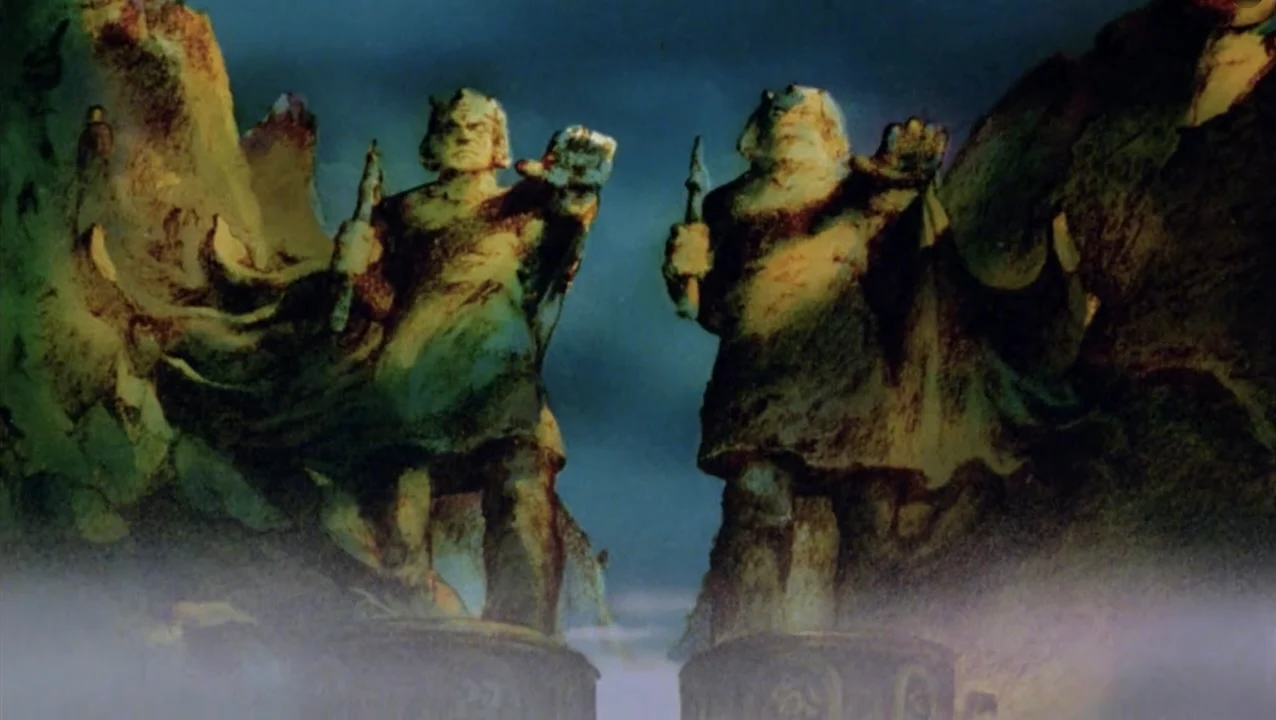
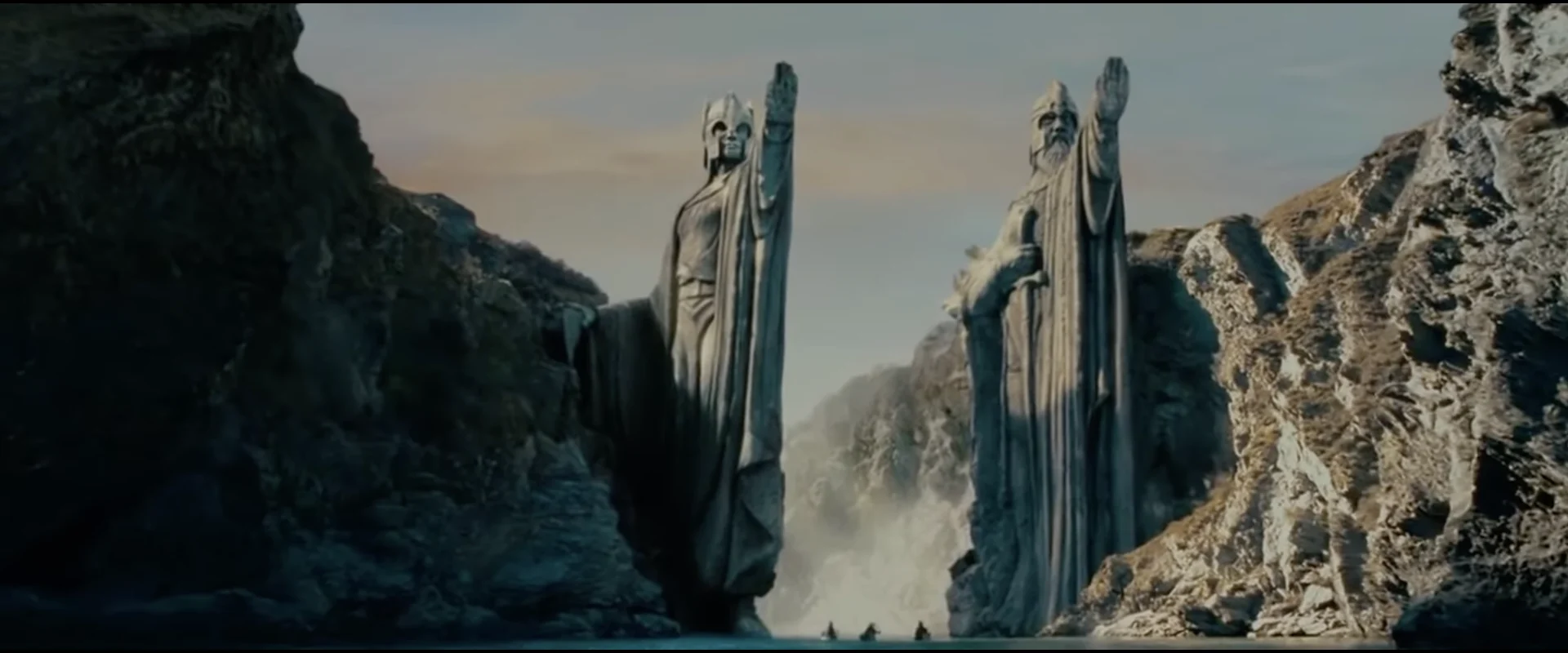
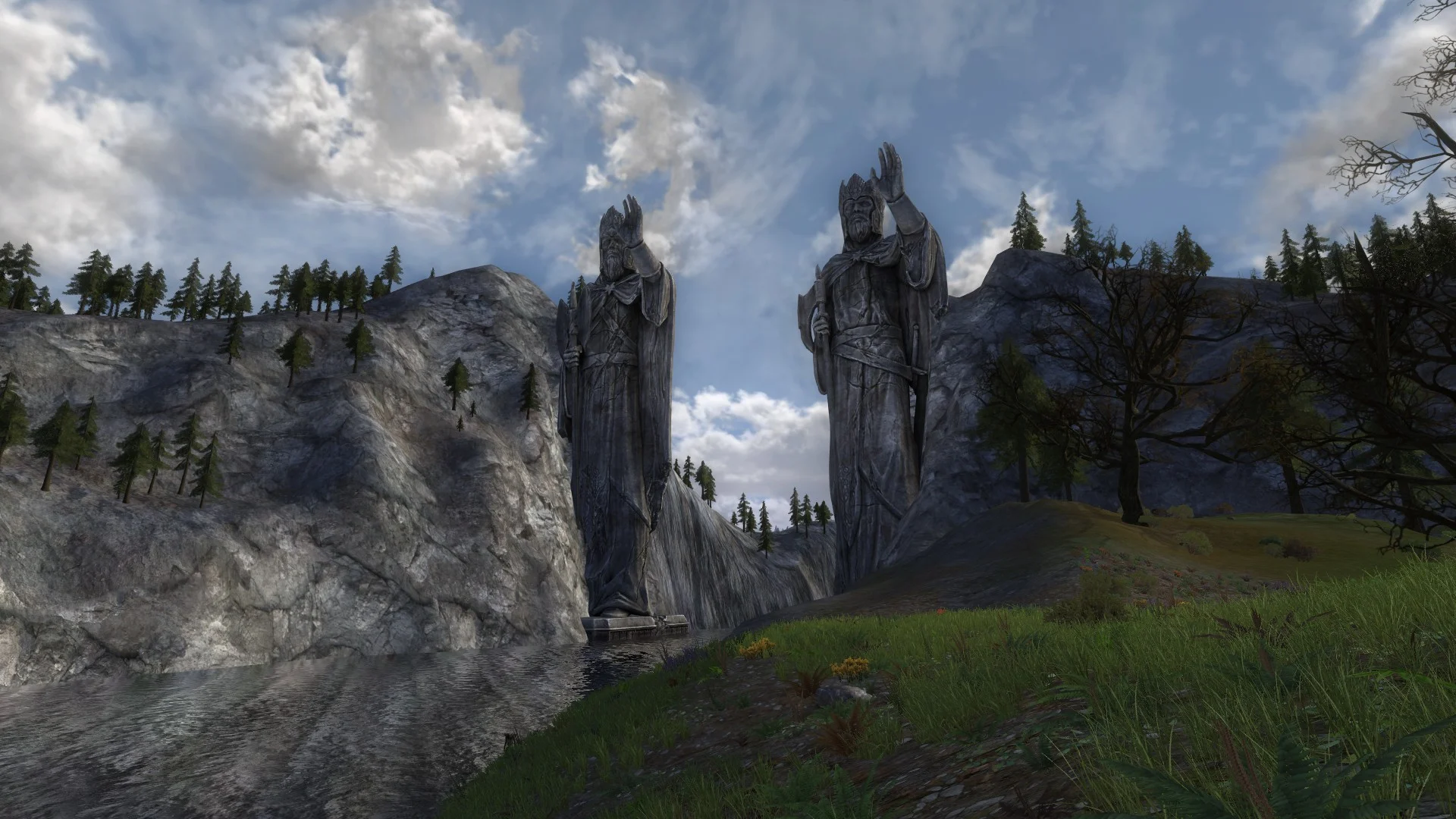
1978: El Señor de los Anillos (película de 1978):
La Comunidad del Anillo pasa junto a los Argonath. Aragorn se los señala, refiriéndose a ellos como los Argonath y los Pilares de los Reyes. Explica que son Isildur y Anárion, sus antepasados.
2001: El Señor del Anillo: La Comunidad del Anillo:
El Argonath está compuesto por dos maquetas grandes y muy detalladas que se combinaron con imágenes de acción real y fondos digitales para transmitir la sensación adecuada de escala. En la película también aparece la cantera situada cerca de los pies de una de las estatuas, que los cineastas consideraron necesaria para obtener los bloques de piedra con los que construir las secciones superiores de las estatuas.
Cabe señalar que, en la película, las estatuas representan a Isildur y a Elendil (ya que casi todas las referencias a Anárion se eliminaron de las películas) y que la estatua de Elendil sostiene a Narsil en lugar de un hacha.
2012: El Señor de los Anillos Online:
El Argonath es un punto de referencia destacado en la zona de la Muralla del Este, en la Region de Estemnet.
Referencias
1. Esta ficha se ha importado inicialmente de TolkienGateway.net el día 21/05/2026.