
Aulë
Herrero de los Valar
Aulë era un Vala y uno de los Aratar, también conocido como el Herrero y el Forjador de los Valar, encargado de la roca, el metal, la naturaleza de las sustancias y las obras artesanales.
Atributos
Aulë gobernaba las sustancias del Ámbar y se deleitaba con todas las obras y oficios, de los que era maestro, desde pequeñas piezas de piel hasta la forja de todas las tierras, montañas y cuencas del Mar. Él creó las rocas, las gemas y todos los minerales.
Disfrutaba ideando y creando cosas nuevas, y de que le alabaran. En estos pensamientos y poderes se asemejaba a Melkor, ya que Ilúvatar le había otorgado una destreza y un conocimiento apenas inferiores. Aulë siempre había sido fiel a Eru y sometía todas sus creaciones a Su voluntad. Nunca sentía envidia de las creaciones ajenas, sino que buscaba y ofrecía consejo. Disfrutaba de las cosas que había creado y del acto mismo de crear, y pasaba siempre a alguna nueva obra, sin acumular ni poseer. Por ello, hubo mucha contienda entre él y Melkor, quien le envidiaba; Melkor siempre estropeaba su obra y Aulë siempre procuraba repararla.
Era el tercero más poderoso de los Aratar. Era esposo de Yavanna, con quien residía en el centro de Valinor.
Varios Maiar están relacionados con Aulë: Mairon, antes de ser corrompido por Melkor y convertirse en Sauron; y Curumo, que más tarde se dirigió a la Tierra Media como un Istar para combatir la Oscuridad, solo para acabar siendo influenciado por la voluntad de Sauron.
Historia
En La Canción de los Ainur, Aulë concibió la mayor parte del tejido de la Tierra. Durante la creación de Arda, Aulë colaboró estrechamente con Manwë y Ulmo; Aulë forjó las sustancias que componían Ámbar y fue quien más participó en la construcción de los continentes y las montañas. Dado que se parecía mucho a Melkor, hubo conflictos entre ellos y Aulë se cansó de reparar los tumultos y desórdenes que Melkor provocaba en su obra. Uno de sus Maiar, Mairon, acabaría cayendo en las garras de su enemigo en aquellos primeros conflictos.
Cuando Ossë también fue seducido por Melkor, Aulë suplicó a Uinen que lo calmara y lo contuviera, y así el Maia regresó junto a su amo Ulmo.
Construyó Angainor, el encadenamiento de Melkor, las lámparas Illuin y Ormal, y los recipientes del Sol y la Luna.
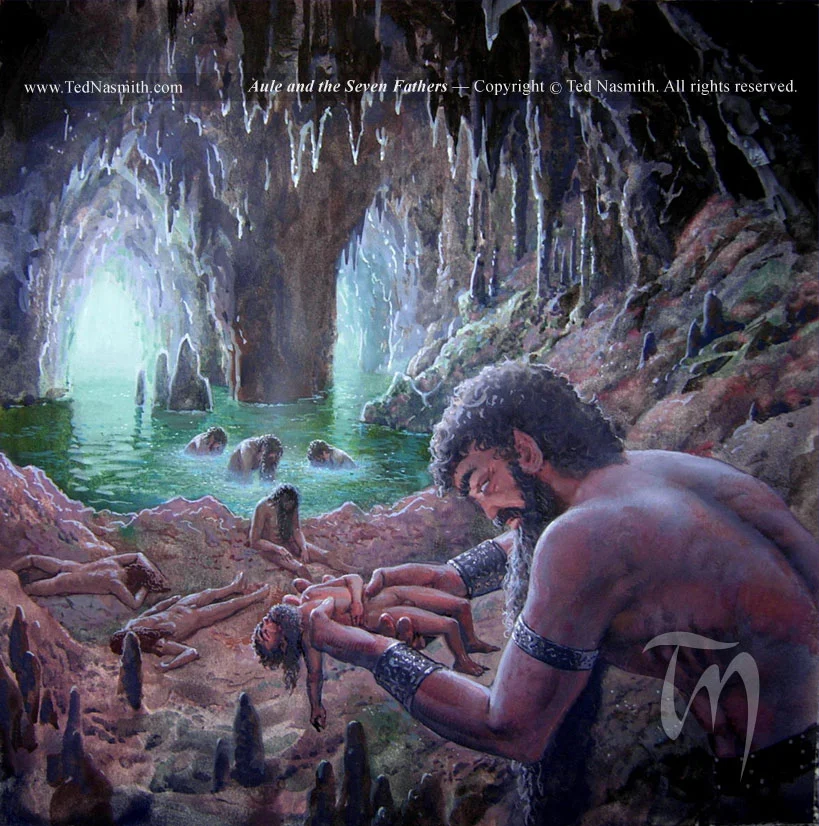
Aulë creó su propia raza de seres, los Enanos, porque no estaba dispuesto a esperar a que aparecieran los Hijos de Ilúvatar. Ilúvatar lo sabía y, incluso mientras Aulë les estaba instruyendo, reprendió a Aulë. Aulë se arrepintió humildemente y entregó a sus hijos a la voluntad de Ilúvatar, quien los aceptó como sus hijos adoptivos. Puesto que Ilúvatar había decidido que los Elfos serían la raza primogénita, sumió a los Enanos en un sueño hasta que los Elfos despertaran en Arda.
Cuando los Elfos llegaron a Valinor, los Noldor se convirtieron en discípulos de Aulë y sus amigos. Fëanor fue su mejor alumno, y de él aprendió el arte de forjar los Silmarils.
Etimología
Se dice que el nombre «Aulë» deriva del valarino Aȝūlēz.
En las primeras «Etimologías», el nombre parece significar «invención» en Quenya, a partir de la raíz GAWA.
Otros nombres
En Khuzdul, su nombre es Mahal («ElCreador»).
A veces se le llamaba Návatar, lo que probablemente significa «padre de los enanos» en Quenya.
En el noldorin más antiguo, su nombre es Gaul, aunque se le suele llamar Belegol («gran Aulë») o Barthan («Artífice del Mundo»).
En las traducciones al inglés antiguo de Eriol, a Aule se le denomina Craeftfrea («Gobernante del Arte»).
Otras versiones del legendarium
En el Léxico gnomico ( gnómico), la versión gnómica de Aulë es Óli. A lo largo del texto también se le otorga el título de Talka Marda («Herrero del Mundo»).
Representación en las adaptaciones
2017: El Señor de los Anillos Online:
Los enanos invocan con frecuencia a Aulë, aunque, dado que el juego no cuenta con la licencia del Silmarillion, se le conoce simplemente como «El Primer Artesano».
Referencias
1. Esta ficha se ha importado inicialmente de TolkienGateway.net el día 21/05/2026.