
Fëanor
El más poderoso de los Hijos de Ilúvatar
Fëanor era el hijo mayor y más querido de Finwë, y le sucedió en el trono de los Noldor.
Ser el más grande de los Noldor —y, de hecho, de todos los Elfos—, era un artesano, un joyero y un guerrero de renombre. Su hazaña más famosa fue la creación de los Silmarils, cuyo robo le llevó a conducir a su pueblo al exilio. Como líder de la rebelión, su apasionado odio hacia Morgoth y su terrible juramento condujeron directamente a los grandes triunfos y tragedias de la Primera Edad.
Historia
La vida en Tirion
Nacido en el año 1169 de los Años de los Árboles, Fëanor era el hijo mayor de Finwë, el primer rey de los Noldor, y de su primera esposa , Míriel Þerindë. Tuvo un periodo de gestación inusualmente largo y absorbió tanta energía vital de Míriel que, tras su nacimiento, ella se cansó de vivir y partió hacia Lórien, donde abandonó voluntariamente su forma corpórea y murió. Tras un veredicto de los Valar, a Finwë se le permitió volver a casarse y, con su segunda esposa, Indis, tuvo dos hijos más —los mediohermanos de Fëanor, Fingolfin y Finarfin— y dos hijas, Findis e Írimë.
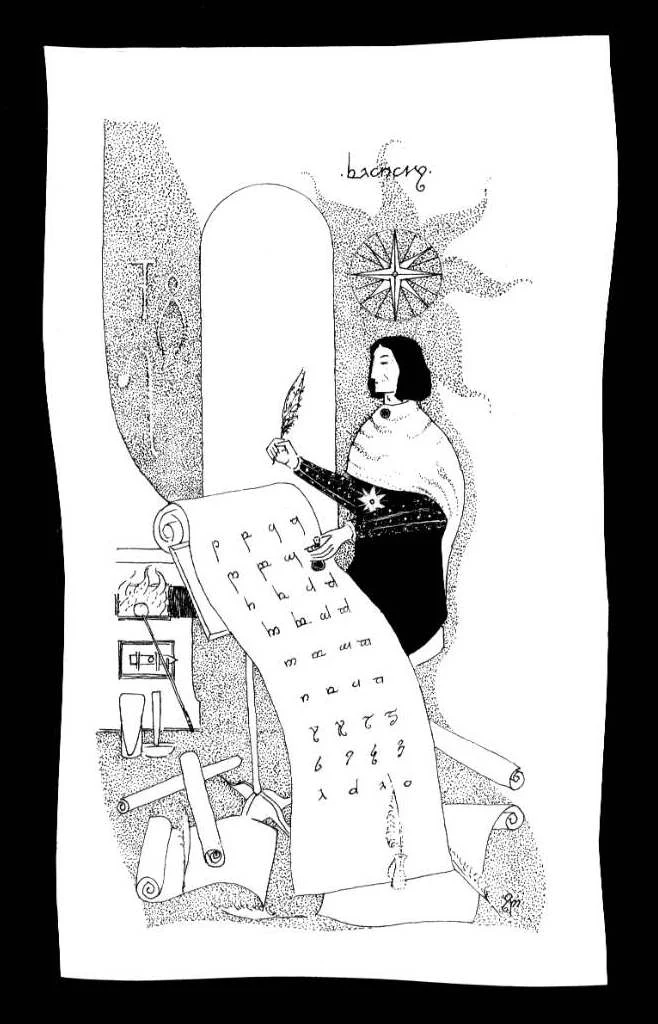
Las habilidades de Fëanor comenzaron a florecer y, además de ser un hábil herrero, era lingüista y maestro del saber. En el año 1250 de los Años de los Árboles, ideó el sistema de escritura Tengwar, mejorando el trabajo de Rúmil. Creó los Palantíri y también forjó las lámparas fëanorianas en esa época. Posteriormente, centró su atención en el estudio de las gemas.
Aún en su juventud, Fëanor se casó con Nerdanel, hija de Mahtan, un gran artesano, quien le dio siete hijos: Maedhros, Maglor, Celegorm, Caranthir, Curufin, Amrod y Amras.
En los Años de los Árboles 1400, Melkor, el más poderoso de los Valar y fuente del mal, engañó a los Valar haciéndoles creer que se había arrepentido de sus malas acciones. Indultado y residente en Valinor, se propuso corromper a los Noldor y logró convertirlos en instrumentos de su malicia, especialmente a Fëanor. Pero Fëanor desconfiaba enormemente de Melkor, lo cual formaba parte del plan de este último.
Inspirado por una sombra de presagio, reflexionó sobre cómo podría preservarse imperecedera la luz de los Dos Árboles. Muchos pensaron que esta idea surgió tras ver el cabello de Galadriel, que era a la vez dorado y plateado. Admiraba tanto su cabello que le pidió un mechón en tres ocasiones, pero Galadriel se negó cada vez y no le concedió ni un solo mechón. Por ello, en el año 1449 de los Años de los Árboles, Fëanor se puso manos a la obra, y para el año 1450 de los Años de los Árboles había logrado el mayor de sus logros: capturar la luz de los Dos Árboles para forjar los tres Silmarils, también llamados las Grandes Joyas. Valoraba los Silmarils por encima de todo lo demás y los lucía en su frente durante los banquetes. Pero más tarde empezó a sospechar cada vez más que los Valar y otros Eldar los codiciaban, hasta el punto de que los custodiaba celosamente, permitiéndoles el acceso solo a su familia más cercana.
Enemistad con Fingolfin
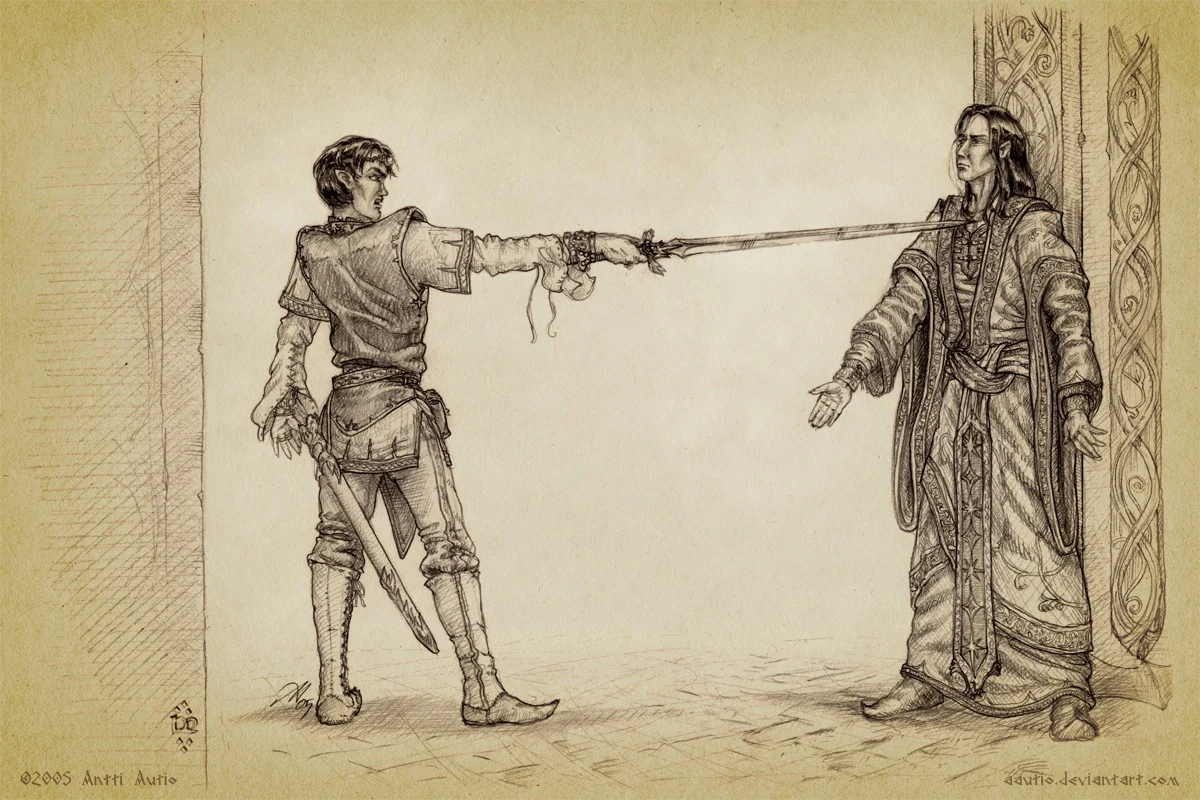
Melkor ansiaba con todas sus fuerzas los Silmarils y su odio hacia Fëanor no hacía más que crecer, pero los Valar aún desconocían las verdaderas intenciones de Melkor. Melkor se aprovechó del temperamento y el orgullo de Fëanor para convencerlo de que su propio hermanastro , Fingolfin, no solo planeaba usurpar su lugar como heredero de Finwë, sino también apoderarse de las joyas para sí mismo. Los Noldor comenzaron entonces a forjar armas, algo que, en aquel momento, ningún otro Eldar poseía en Valinor. La hostilidad de Fëanor creció hasta tal punto que, en los años 1490 de los Árboles, amenazó la vida de Fingolfin. Por ello, los Valar lo exiliaron a Formenos. Se llevó consigo un tesoro considerable, incluidos los Silmarils, que guardó en un cofre cerrado con llave. En señal de apoyo a su hijo mayor, Finwë también se retiró a Formenos.
Los Valar se dieron cuenta de que Melkor estaba detrás de las acciones de Fëanor. Enviaron a Tulkas para encarcelarlo de nuevo, pero no lograron encontrarlo. Melkor permaneció oculto durante mucho tiempo hasta que, en los Años de los Árboles 1492, apareció inesperadamente en Formenos. Melkor intentó de nuevo manipular a Fëanor, pero fue demasiado lejos, y Fëanor se dio cuenta de que el verdadero objetivo de Melkor era hacerse con los Silmarils. Le cerró la puerta en las narices y, enfurecido, Melkor se marchó. Cuando los Valar se enteraron del incidente, reanudaron su persecución, pero era evidente que Melkor había huido de Valinor.
El robo de los Silmarils
En los Años de los Árboles 1495, los Valar intentaron reconciliar a Fëanor y Fingolfin, y sanar la enemistad entre los Noldor y los Valar, por lo que los invitaron a todos a Valimar para hacer las paces. Fingolfin tendió la mano a su medio hermano, reconociendo el lugar que le correspondía a Fëanor como el mayor, lo cual este aceptó a regañadientes.
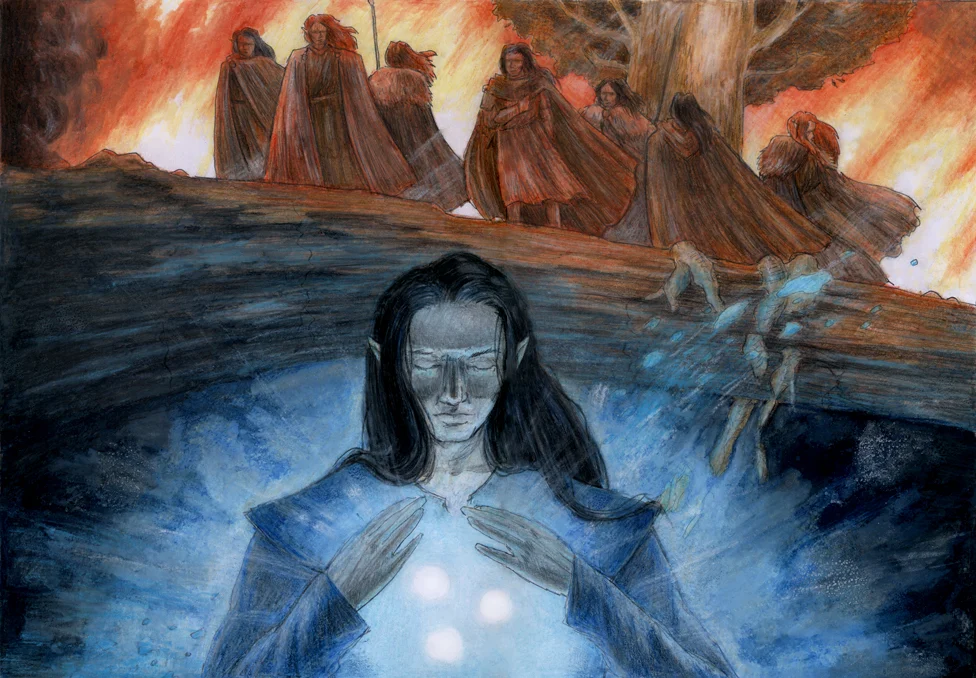
Mientras tanto, tras fingir en un primer momento que se dirigía al norte, Melkor se había escabullido a Avathar, en el sur de Aman, para buscar a la malvada criatura con aspecto de araña llamada Ungoliant. Justo cuando Fëanor y Fingolfin se habían reconciliado, Ungoliant ayudó a Morgoth a destruir los Dos Árboles de Valinor, sumiendo a en la Oscuridad.
Yavanna examinó los Dos Árboles y los encontró sin vida. La luz de los Árboles solo perduraba en los Silmarils, y ella afirmó que solo gracias a su poder podría restaurar los Árboles. Manwë pidió entonces a Fëanor que los entregara con ese fin, pero Fëanor declaró rotundamente que no renunciaría a sus Silmarils por voluntad propia; si los Valar le obligaban, dijo, no serían mejores que Melkor. Fue tras esto cuando llegaron mensajeros que anunciaron la incursión en Formenos.
Según los mensajeros, Melkor, envuelto en una impenetrable niebla negra, había llegado a la cámara acorazada de Fëanor en Formenos. Finwë luchó contra Melkor y perdió, y fue el primero en caer muerto en Valinor. Melkor saqueó la cámara acorazada y se llevó muchas joyas valiosas, incluidos los Silmarils. Él y Ungoliant escaparon cruzando el Helcaraxë, o Hielo Crujiente, en el Norte, hasta Beleriand, en la Tierra Media.
La realeza
La matanza de parientes en Alqualondë
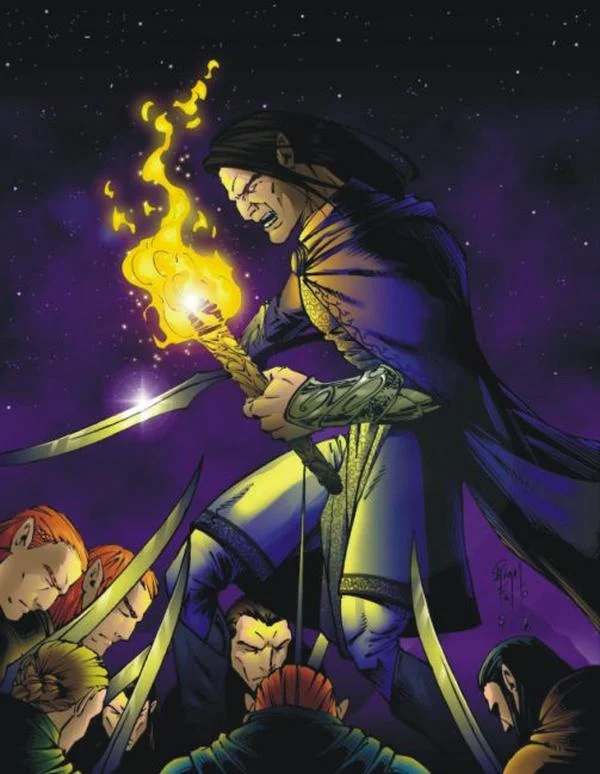
Los Valar y los Eldar comprendieron entonces plenamente el alcance de la traición de Melkor. Fëanor, al enterarse del asesinato de su padre y del robo de sus preciados Silmarils, bautizó a Melkor como «Morgoth», o «Enemigo Negro». Tras la muerte de su padre, Fëanor reclamó la corona de los Noldor y pronunció un apasionado discurso, que, sin saberlo, llenó de las mentiras de Morgoth. Movilizó a los Noldor contra el Señor Oscuro, pero, debido a la influencia de Morgoth, también culpó a los Valar de los actos de Morgoth. Convenció a la mayor parte de su pueblo de que, dado que los Valar no podían protegerlos, los Noldor debían seguirle a la Tierra Media y luchar contra el Señor Oscuro. Fëanor pronunció entonces el terrible Juramento de Fëanor, que también proclamaron sus siete hijos, prometiendo luchar contra cualquiera —ya fuera Elfo, Hombre, Maia o Vala— que les ocultara los Silmarils, e invocando incluso a Ilúvatar como testigo. Este juramento provocó numerosos conflictos y, más tarde, causó una gran tragedia entre sus siete hijos.
En busca de una forma de llegar a la Tierra Media, se dirigió a las costas de Aman, donde vivían los Teleri, un pueblo marinero, y les exigió que le permitieran utilizar sus barcos. Cuando los Teleri se negaron a cederles o prestarles sus embarcaciones, Fëanor ordenó a los Noldor que se apoderaran de los barcos por la fuerza. Los Teleri se resistieron y estalló una batalla en la que muchos de ellos perecieron, pues solo estaban armados con arcos de caza, frente a los Noldor, que contaban con armamento completo. Los Teleri lograron hacer retroceder a Fëanor en tres ocasiones hasta que Fingon, al frente del ejército de su padre Fingolfin, se unió a la batalla, lo que acabó por abrumar a los Teleri.
A raíz de este acto, los Valar proclamaron el Hado de los Noldor, en el que profetizaron el fracaso de todos aquellos que siguieran a la Casa de Fëanor. Fëanor decidió seguir adelante y añadió otra profecía: que sus hazañas perdurarían en las canciones hasta el fin del mundo. Sin embargo, aquellos que se arrepintieron regresaron con Finarfin, el tercer hijo de Finwë. Fueron aceptados por los Valar, y Finarfin reinó como rey de los Noldor que quedaban en Valinor.
El exilio a la Tierra Media y la muerte
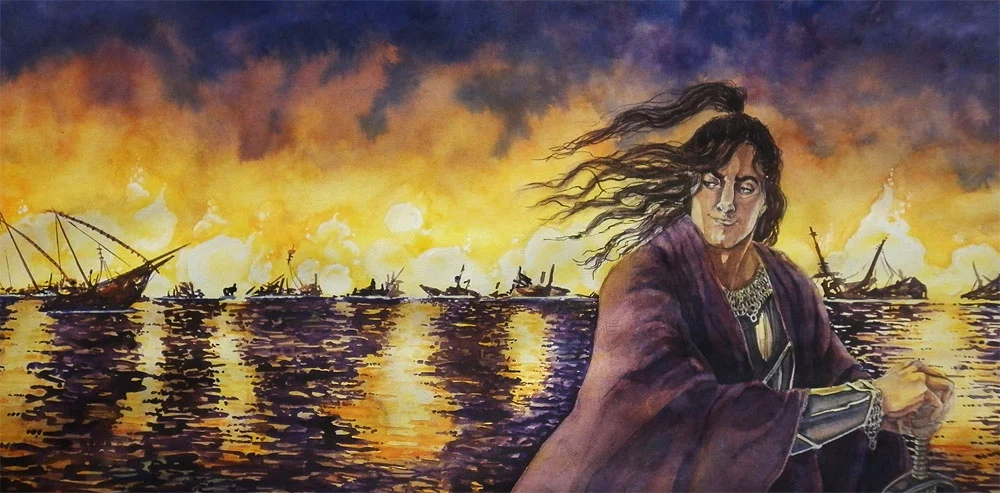
A medida que avanzaba el año 1496 de los Años de los Árboles, Fëanor condujo a los Noldor hacia el norte. En el año 1497 de los Años de los Árboles, el ejército había llegado al Helkaraxë y se detuvo. No había suficientes barcos para transportar a todos los Noldor a través del mar, por lo que Fëanor y sus hijos se apoderaron de los barcos y partieron. Al llegar a Losgar, la desembocadura del Estuario de Drengist en la tierra de Lammoth, en el Lejano Occidente de Beleriand, por donde Morgoth y Ungoliant habían pasado poco antes, Fëanor decidió quemar las naves y dejar atrás a los Seguidores de Fingolfin. Como Arda era llana en aquellos días, los Noldor que quedaban vieron las llamas y se dieron cuenta de que, si querían llegar a la Tierra Media, no tenían más remedio que cruzar el Helcaraxë. Así lo hicieron bajo el liderazgo de Fingolfin, y sufrieron grandes pérdidas por el camino, lo que aumentó considerablemente la animadversión que sentían hacia la Casa de Fëanor.
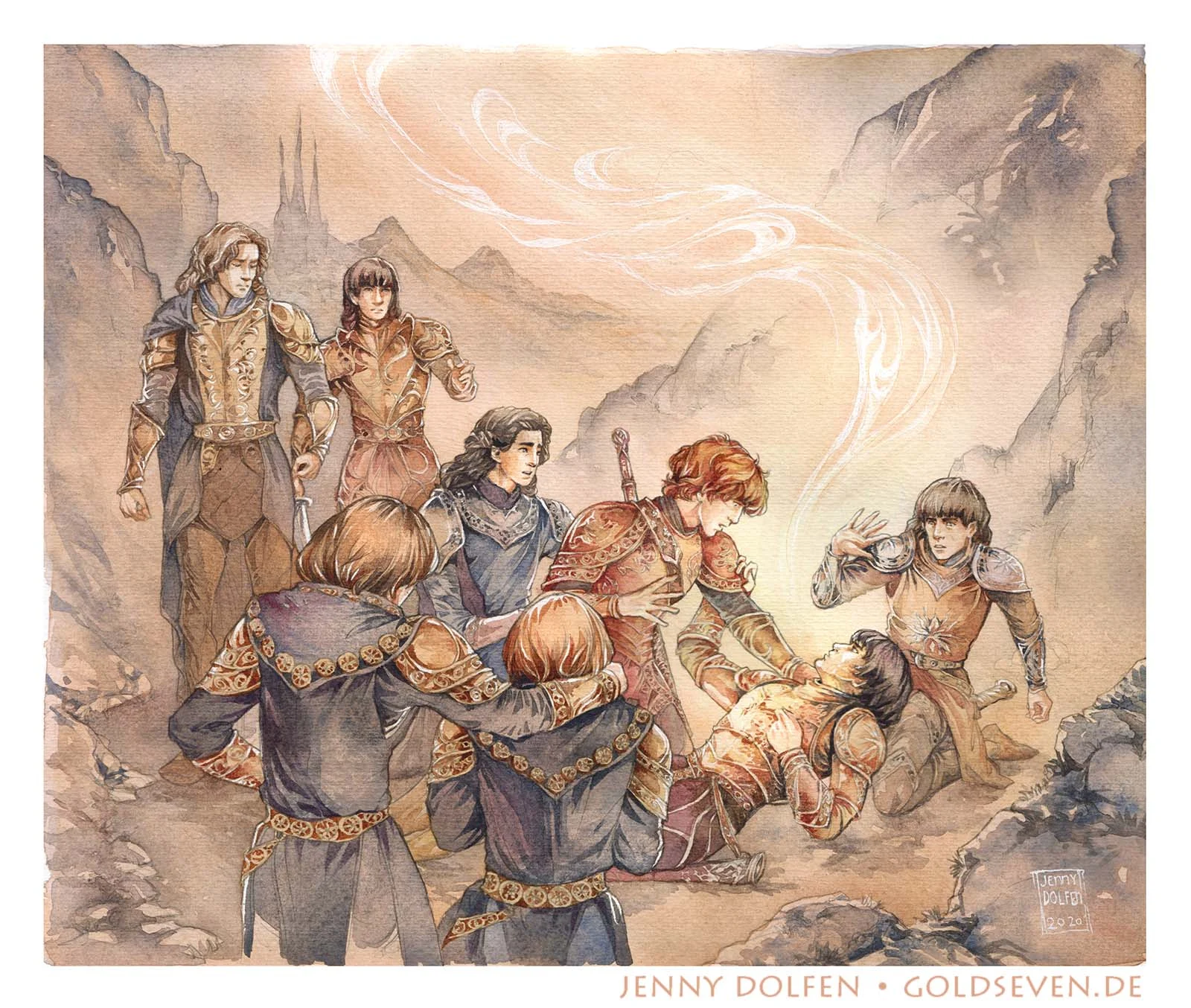
Al enterarse de la llegada de los Noldor, Morgoth convocó a sus ejércitos desde su fortaleza de Angband y atacó el campamento de Fëanor en Mithrim. Esta batalla se denominó Dagor-Nuin-Giliath («Batalla bajo las estrellas»), pues el Sol y la Luna aún no habían sido creados. Los Noldor lograron ganar la batalla y dispersar a los ejércitos de Morgoth. Fëanor, aún enfurecido, siguió avanzando hacia Angband con sus hijos. Llegó a los confines de Dor Daedeloth, pero cayó en una emboscada tendida por una fuerza de Balrogs, con pocos Elfos a su lado. Luchó con valentía, acuchillando a sus enemigos, incluso tras recibir varias heridas, pero fue derrotado por Gothmog, Señor de los Balrogs.
Sus hijos se enfrentaron a los Balrogs con una gran fuerza de Elfos y lograron ahuyentarlos. Sin embargo, mientras se llevaban a Fëanor del campo de batalla, él supo que sus heridas eran mortales. Lo llevaron a las laderas del Ered Wethrin, desde donde divisó a lo lejos las cumbres de Thangorodrim. Maldijo a Morgoth tres veces, pero con los ojos de la muerte supo que los Elfos, sin ayuda, nunca derribarían las Torres Oscuras. En el momento de su muerte, el paso de su espíritu ardiente redujo su cuerpo a cenizas. Fue la única persona que murió de esta manera, pues nunca se había visto ni oído hablar de una muerte como la suya.
Sus hijos seguían atados por el Juramento de recuperar los Silmarils, lo que determinaría muchos de los acontecimientos de la Tierra Media durante la Primera Edad.
El espíritu de Fëanor permaneció en los Salones de Mandos. Se dice que regresará para el Dagor Dagorath, y que finalmente recuperará sus amados Silmarils y los romperá para que Yavanna pueda usar su luz para restaurar los Dos Árboles.
Obras
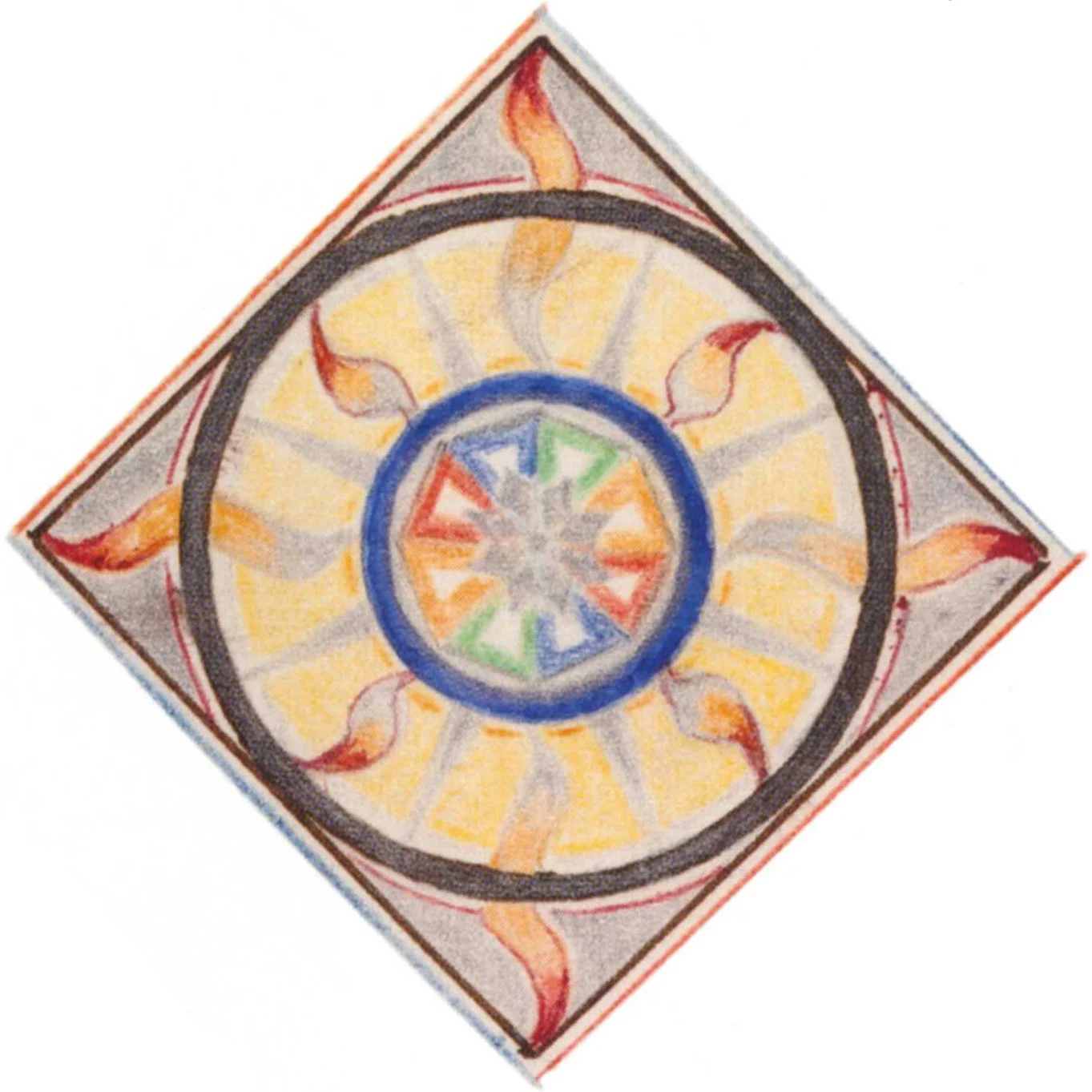
En días posteriores, se atribuyeron a Fëanor muchos inventos, como el ñaltalmar. Sin embargo, se decía que estos eran mucho más antiguos.
Etimología
Fëanor es una combinación inusual de Quenya y Sindarin: fëa («espíritu, alma») + naur («fuego»). El nombre es, en realidad, una versión semisind arizada de su nombre materno en Quenya , Fëanáro; la forma correcta en Sindarin debería haber sido Faenor.
El nombre ha cambiado desde las primeras versiones del legendarium. En el «Gnomish Lexicon», escrito alrededor de 1917, se presenta a Fëanor como el equivalente en qenya del gnomish Fionor («forjador de copas»), pero se menciona sin conexión aparente con el personaje posterior de Noldoli. Sin embargo, Tolkien utilizó «Fëanor» para el personaje en la narración de los Cuentos Perdidos. En la fase noldorin, «Fëanor» es el nombre original, mientras que «Fëanáro» es el equivalente en qenya. Ambos significaban «Sol radiante», a partir del quendiano primitivo «Phayanâro».
Otros nombres
Cuando nació Fëanor, se le llamó en un principio Minyon («Primogénito»). Su nombre paterno fue al principio el mismo que el de su padre: Finwë, o simplemente Finwion («Hijo de Finwë»). Pero cuando demostró sus habilidades, se amplió a Curufinwë, añadiéndole «curu» («habilidad»).
Su nombre materno era Fëanáro, que se traduce como «Espíritu de Fuego», y se forma añadiendo fëa («espíritu») y Nár («llama»). Fëanor se autodenominaba «Hijo de Þerindë» tras el cambio de la «Þ» por la «s».
En los días de la Huida de los Noldor, Fëanor creía que los Silmarils se habían convertido en símbolos e instrumentos de su poder, por lo que se otorgó a sí mismo el título de «señor de las luces».
Otras versiones del legendarium
El legendarium primitivo
El personaje de Fëanor aparece por primera vez en el Libro de los Cuentos Perdidos, en el que Fëanor, uno de los Noldoli, recoge perlas y otras joyas, y almacena en ellas la luz de los árboles Laurelin y Silpion, creando los tres Silmarils: gemas que brillan con luz propia y superan en belleza a todas las demás joyas. Cuando Melko comienza a sembrar el descontento entre los Noldoli, Fëanor, junto con Inwë y Ellu Melemno, aconsejan a Nólemë que se informe a Manwë de las andanzas de Melko. Sin embargo, Melko también habla con Manwë, diciéndole que los Noldoli se están rebelando contra los Valar, y cuando llega la embajada de Nólemë, Manwë se muestra descontento con ambas partes, envía a Melko de vuelta a Mandos y ordena que los Noldoli abandonen su hogar en Kôr y se establezcan en otro lugar, para que su descontento no se extienda entre los demás linajes.
Los Noldoli se trasladan al valle de Sirnúmen y permanecen allí durante un tiempo, hasta la celebración de un gran banquete en Valmar, al que acuden junto con el resto de los Eldar. Durante el banquete, Melko y sus cómplices se dirigen a la morada desierta de los Noldoli y matan a los guardias que habían dejado allí, incluido el padre de Fëanor, Bruithwir. Saquean el tesoro que allí se encontraba, llevándose las gemas más gloriosas, incluidos los Silmarils. Tras esta tragedia, los Noldoli quedan desconsolados, y Manwë les concede permiso para regresar a su hogar en Kôr. Sin embargo, algunos, entre ellos Fëanor, deciden quedarse en Sirnúmen. Allí, Fëanor se sumerge en sus cavilaciones, esforzándose sin éxito por recrear los Silmarils, y, sentado junto a la tumba de su padre, su descontento va en aumento hasta que, por fin, se dirige a Kôr, hablando en contra de los Valar e instando a los Noldoli a abandonar Valinor. Poco después, tras la destrucción de los Dos Árboles de Valinor Gwerlum's Melko y , Fëanor convence a su pueblo de que se arme, le siga y abandone Valinor.
Existen diferencias clave en esta parte de la historia con respecto a versiones posteriores, pero también hay similitudes. Por un lado, en los Cuentos Perdidos, el padre de Fëanor es Bruithwir, en lugar de Finwë Nólemë. Sin embargo, se mantiene el elemento de que un pariente cercano de Fëanor es asesinado por Melko en su hogar en el exilio. Fëanor sigue siendo el creador de los Silmarils y, enfurecido por su pérdida y la de su padre, sigue animando a su pueblo a huir de Valinor utilizando la misma retórica que en versiones posteriores.
En la siguiente parte de la historia, Fëanor conduce a los Noldoli al exilio desde Valinor. Una nota al margen también lo describe como el iniciador de la Matanza de los Suyos en Kópas Alqalunten, en un intento por robar las naves de los Solosimpi. Los Noldoli sufrieron grandes pérdidas al cruzar el Helkaraksë, y muchos culparon amargamente a Fëanor de su difícil situación. Sin embargo, al fin lograron cruzar a la Tierra Media. Los hijos de Fëanor se mencionan por primera vez más adelante en el relato, al haber escondido un alijo de cristales en Sirnúmen, que más tarde fueron utilizados por Aulë en la construcción de la Nave de la Luna tras la partida de los Noldoli.
Según los primeros bocetos de El libro de los cuentos perdidos, los Noldoli se dispersaron por la tierra de Hisilómë. Los distintos bocetos de esa época presentan diferentes destinos para Fëanor. En uno de ellos, se pierde en las Aguas de Asgon, al zarpar hacia la Roca Insular en busca de sus joyas. En otro, es Nólemë quien muere en Asgon, y Fëanor, en lugar de su hijo (como en versiones posteriores y en el otro esbozo), lidera un ejército contra Melko, y es capturado y atormentado. En bocetos posteriores, los Noldoli también llegan a Hisilómë, y Fëanor se ahoga en las Aguas de Mithrim. En esta versión, es Maidros, hijo de Fëanor, quien lidera un ejército contra Melko y es capturado. Aunque la forma en que muere Fëanor aquí difiere de la del *Silmarillion* publicado, se asemeja a ella en que muere poco después de sacar a los Noldoli de la Tierra Media, y le sobreviven sus hijos y su pueblo.
Historia de Wéland/Fëanor
Existe una recopilación de textos denominada «Documentos rúnicos primitivos», contemporánea de El libro de los cuentos perdidos, en la que uno de ellos identifica a Fëanor con el legendario herrero germánico llamado Wayland. Esa historia se sitúa durante las guerras de los Elfos contra Melko.
En ese texto, Fëanor fue capturado por un hombre llamado Niðad, rey de los Niaroth. Sin embargo, Fëanor mató a los hijos de Niðad y logró escapar fabricándose unas alas artificiales; además, se acostó con la hija del rey , Beaduhilde, y huyó con ella, pero finalmente la perdió en el bosque.
Finalmente, Beaduhilde (que ya estaba embarazada) perdonó a Fëanor y, a pesar de la ira de su padre por su embarazo, consiguió obtener la bendición de Niðad para su hijo. Para más información, véase «Inspiración».
Representación en las adaptaciones
2022: El Señor de los Anillos: Los Anillos de Poder, primera temporada:
Episodio 2: A la deriva:
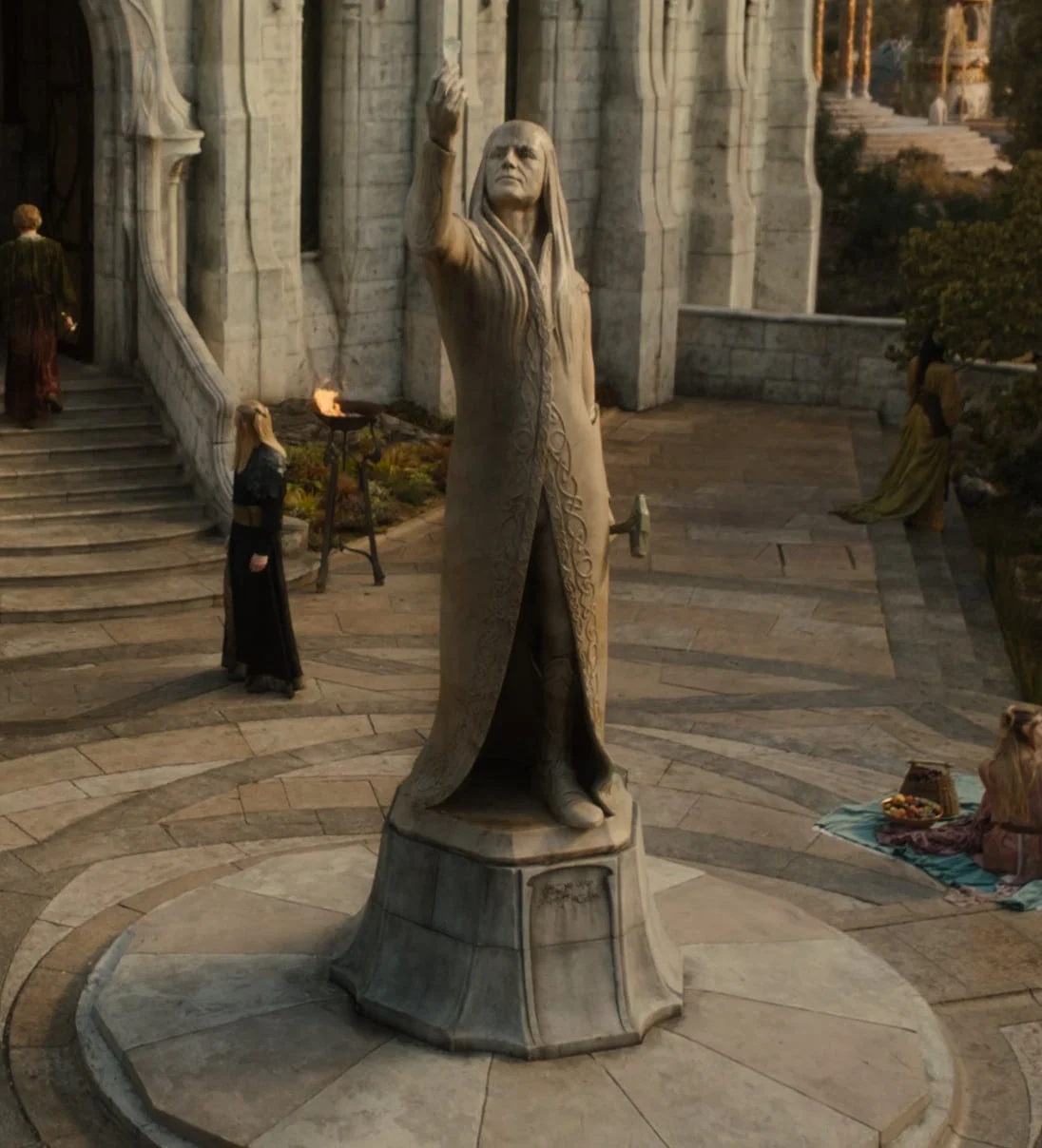
Cuando Elrond entra en el taller de Celebrimbor, este le muestra muchos de los objetos que posee, entre ellos el martillo de Fëanor, el mismo instrumento que Fëanor utilizó para forjar los propios Silmarils.
Episodio 8: Aleado:
Al intentar forjar una «corona» de poder, Celebrimbor utiliza el martillo de Fëanor por encima de todos sus demás martillos.
Referencias
1. Esta ficha se ha importado inicialmente de TolkienGateway.net el día 25/05/2026.