
Fornost Erain
Fornost Erain fue la segunda capital de Arnor y, más tarde, la capital de Arthedain. Estaba situada en el extremo sur de las Quebradas del Norte, a unas 100 millas al norte de Bree, en el extremo norte del Camino del Norte-Sur .
Historia
Historia temprana
Es posible que Fornost se fundara en torno al año 3320 de la Segunda Edad, coincidiendo con el establecimiento del reino de Arnor o poco después, ya que no hay constancia de que los Númenóreanos llegaran tan al Norte antes de la Caída de Númenor. Tras la caída de Sauron en la Guerra de la Última Alianza, hacia el año 1 de la Tercera Edad, la mayor parte del ejército de Arnor marchó hacia el oeste por el Camino del Norte-Sur, atravesando los Vados del Isen, y continuó hacia el norte hasta Fornost. El número de Dúnedain de Arnor había disminuido a causa de la Guerra de la Última Alianza y la Catástrofe de los Campos Gladios, y la ciudad de Annúminas quedó reducida a ruinas. Como consecuencia, los herederos de Valandil trasladaron la capital de Arnor a Fornost.
En el año 861 de la Tercera Edad, cuando murió el rey Eärendur, Arnor se dividió en los reinos de Arthedain, Cardolan y Rhudaur, debido a las desavenencias entre sus hijos. Como consecuencia, Fornost se convirtió en la capital del nuevo reino de Arthedain. En el año 1409 de la Tercera Edad, cuando el Rey Brujo de Angmar se apoderó de la Torre de Amon Sûl, el palantír que se encontraba en la torre fue rescatado y llevado de vuelta a Fornost durante la retirada. El nuevo y joven rey Araphor repelió al enemigo de Fornost y de las Quebradas del Norte.
Caída
En el año 1974 de la Tercera Edad, las fuerzas del El Rey Brujo de Angmar invadieron Arthedain antes de que terminara el invierno y tomaron Fornost. El rey Arvedui resistió primero en las Quebradas del Norte hasta el último momento, y luego huyó con parte de su guardia a las minas enanas situadas en el extremo norte de las Montañas Azules y se ahogó en la Bahía Helada de Forochel con los dos Palantíri que había salvado de las fuerzas de Angmar en marzo del año siguiente. Mientras tanto, Fornost se convirtió en la morada del Rey Brujo y su malvada gente, quienes usurparon la Casa de los Reyes.
En el año 1975 de la Tercera Edad, una flota de barcos de Gondor, capitaneada por el príncipe Eärnur de Gondor, desembarcó en Mithlond. Los Elfos de Lindon, liderados por Círdan, los Dúnedain del Norte que quedaban y algunos Hobbits de La Comarca se unieron a la Hueste del Occidente. Eärnur se enfrentó al Rey Brujo de Angmar en las llanuras al oeste de Fornost y derrotó a los ejércitos de Angmar, pero el propio Rey Brujo logró escapar. Tras la muerte del rey Arvedui y la derrota del ejército de Angmar, el Reino de Arthedain llegó a su fin, ya que quedaban pocos Dúnedain del Norte y la población de todos los demás pueblos de Eriador había disminuido. Los Dúnedain del Norte se convirtieron en un pueblo secreto y errante que se adentró en las Sombras. Como consecuencia, es posible que Fornost quedara abandonada tras la derrota del ejército de Angmar.
Legado
Tras el abandono de Fornost Erain, los Hombres la llamaban «el Muro de los Muertos» y temían acercarse a ella. Según Cebadilla Mantecona, el posadero de «El Poney Pisador», se decía que Fornost era una tierra embrujada. Sin embargo, los Montaraces se dirigieron allí, aunque se desconoce qué hicieron y cuánto tiempo permanecieron en el lugar.
Es posible que Fornost fuera reconstruida y repoblada después de que el rey Elessar reunificara Gondor y Arnor, ya que Gandalf había anunciado que el rey Elessar volvería allí algún día y que la Hermosa Gente cabalgaría por Bree, y que mucha gente solía vivir al final del Camino Verde, en las Quebradas del Norte.
Etimología
Fornost Erain significa en Sindarin «Fortaleza del Norte (de los) Reyes», ya que es un compuesto de forn («norte») + ost («fortaleza») y erain, el plural de aran («rey»).
Los nombres Oestron de Fornost Erain y Fornost eran «Norbury of the Kings» y «Norbury», respectivamente. Norbury es una forma modernizada del inglés antiguo north-burg, que significa «ciudad (fortificada) del norte».
Otras versiones del legendarium
En una versión manuscrita anterior de «La Cuenta de los Años de la Segunda Edad» se menciona que los fragmentos de Narsil fueron llevados a Valandil en Imladris, que este se convirtió en Rey de Arnor y vivió en Fornost.
En una versión anterior de lo que más tarde se convertiría en el Apéndice A, se menciona que Annúminas quedó desierta debido a la disminución de la población y que la ciudad del reino de Arthedain, del hijo mayor de Earendur, era Fornost. Una versión aún más antigua contenía una nota en la que se indicaba que Valandil se trasladó a Fornost y que Annúminas quedó desierta, pero esto se tachó posteriormente y se añadió a la nota sobre el rey Earendil —cuyo nombre se cambió más tarde por el de Earendur— que Annúminas quedó desierta.
En una versión manuscrita anterior de «La Cuenta de los Años de la Tercera Edad» se menciona que Valandil se convirtió en rey de Arnor y vivió en Annuminas en el año 10 de la Tercera Edad, que Amlaith de Fornost gobernó el reino de Arthedain, Annuminas quedó desierta tras la muerte de Earendur en el año 861 de la Tercera Edad y los nombres de los reyes de Fornost dejaron de escribirse en forma de Alto Élfico.
En una versión anterior del Prólogo de El Señor de los Anillos y en una versión manuscrita anterior de La Cuenta de los Años de la Tercera Edad, el nombre en Oestron de Fornost era Northworthy.
Los nombres anteriores de Fornost son Osforod, el «Northburg», o Fornobel, el «North Burg». En el primer mapa de El Señor de los Anillos (y en el Mapa de 1943 posterior ), Fornost se denomina Fornobel.
Representación en las adaptaciones
Imágenes de adaptaciones de Fornost
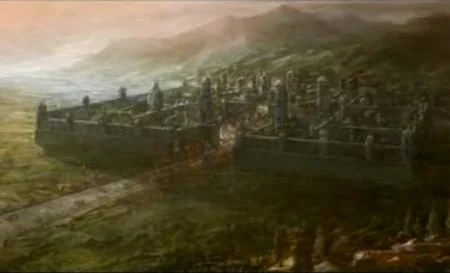
2006: La Batalla por la Tierra Media II: El ascenso del Rey Brujo:
En la expansión The Rise of the Witch-king, Fornost es sitiada por las fuerzas del Rey Brujo.
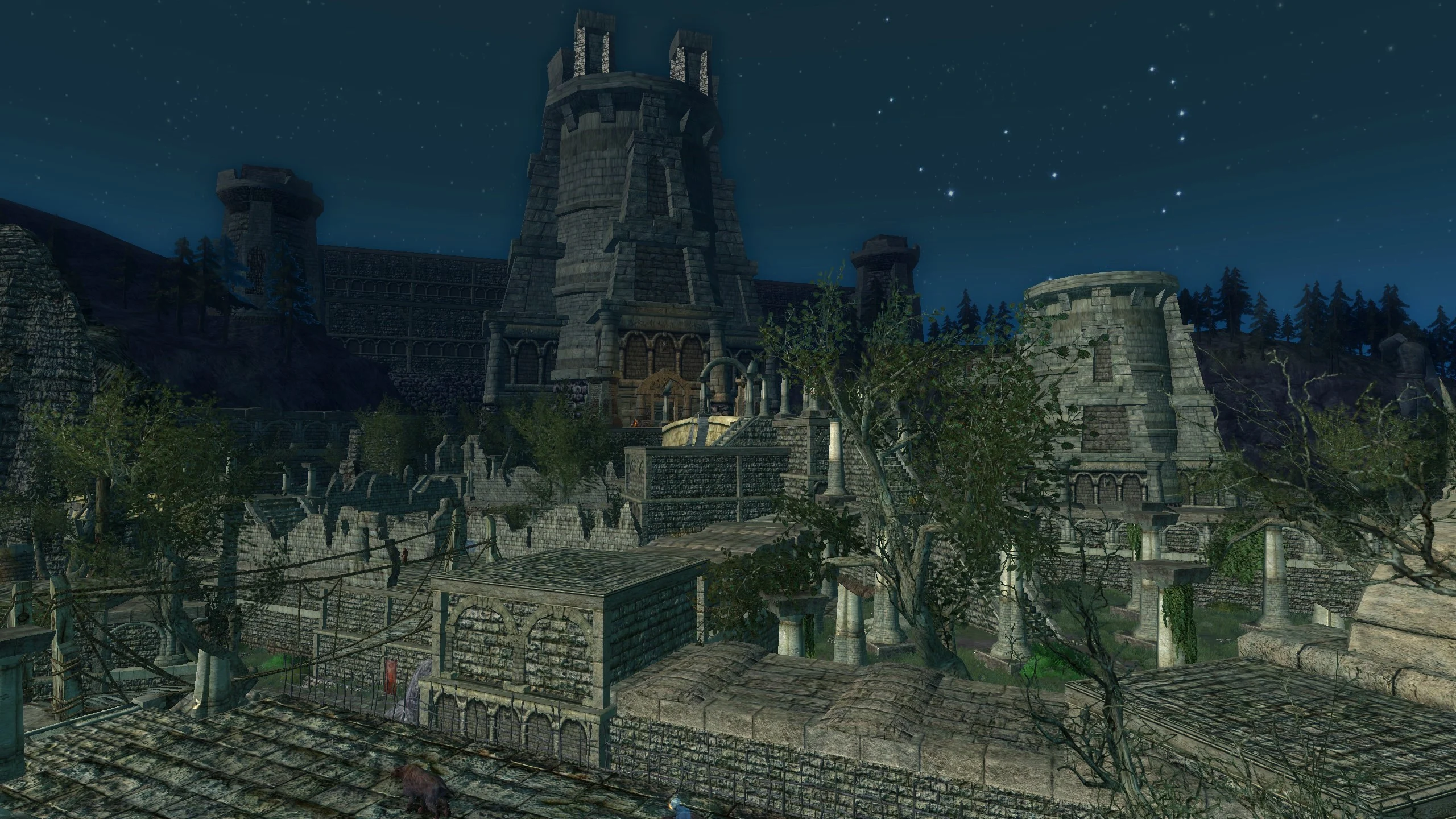
2007: El Señor de los Anillos Online:
Fornost Erain se conoce simplemente como Fornost y se encuentra en el extremo norte de las Quebradas del Norte. Está poblada por espectros, Orcos y Huargos.
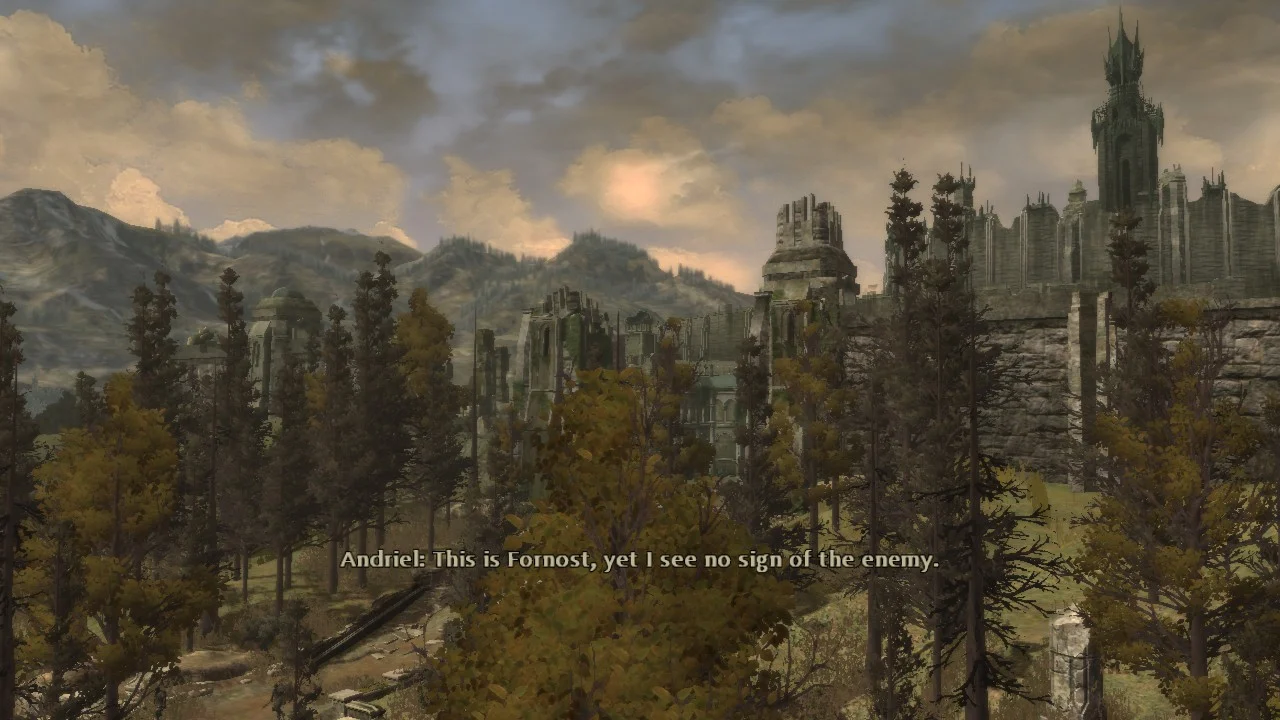
2011: El Señor de los Anillos: La Guerra del Norte:
El primer capítulo del juego se centra en Fornost. Agandaûr ha reunido en Fornost un ejército de orcos de las Montanas Nubladas y se ha preparado para atacar a los Pueblos Libres. Eradan, Andriel y Farin se infiltran en Fornost siguiendo las órdenes de Aragorn. Liberan al águila capturada, Beleram, y colaboran con Elladan y Elrohir para detener a Agandaûr. Agandaûr huye y Tharzog —líder de los orcos— muere, tras lo cual los orcos se quedan sin líder y comienzan las luchas entre facciones, lo que impide el ataque.
Los lugares que se pueden visitar son la Puerta Principal, las Almenas, los recintos interior y exterior y la Ciudadela.
Referencias
1. Esta ficha se ha importado inicialmente de TolkienGateway.net el día 25/05/2026.