
Glamdring
La espada de Turgon y Gandalf
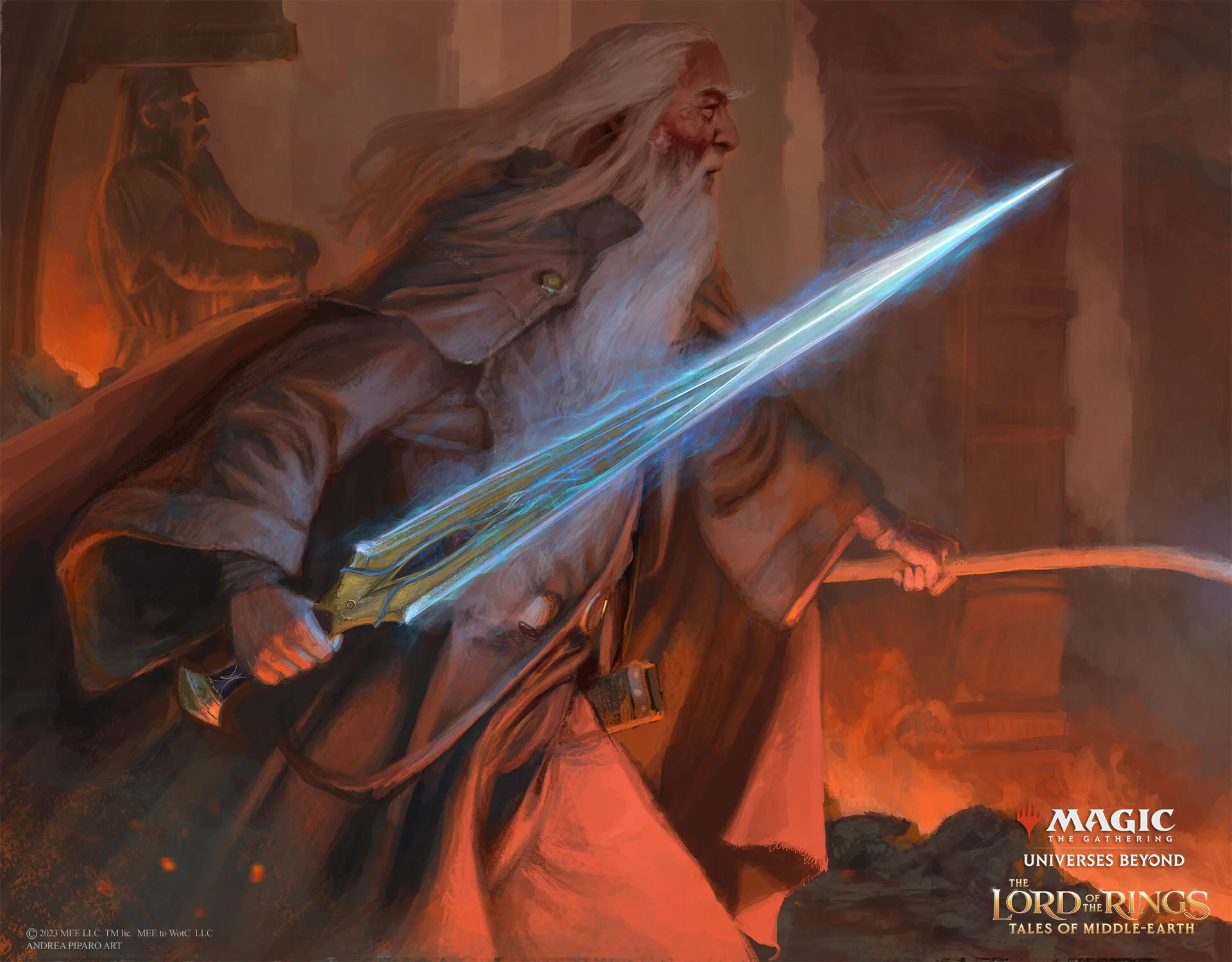
Glamdring era una espada que, según se dice, perteneció a Turgon, pero que es más conocida por haber sido el arma de Gandalf durante la Guerra del Anillo. En oestron se la conocía como «Martillo del Enemigo», y los Orcos la llamaban «Demoledora».
Historia
Demoledora
Glamdring fue empuñada originalmente por Turgon, rey de Gondolin. Debió de blandirla con fuerza durante la Nirnaeth Arnoediad o la Caída de Gondolin, ya que los orcos la llamaban «Demoledora» y huían ante ella. Incluso hasta finales de la Tercera Edad, los orcos de las Montanas Nubladas conocían esta espada legendaria, por lo que debió de causar bastante daño.
Es muy probable que el nombre tenga su origen en la Nirnaeth Arnoediad, donde se dice que Turgon «se abrió paso a golpes hasta llegar junto a su hermano». Ningún otro relato menciona las hazañas de la espada, y se desconoce qué fue de ella durante La Caída de Gondolin. Turgon pereció cuando la Torre del Rey se derrumbó sobre él, pero no se dice nada sobre el destino de Glamdring.
Supervivencia
La espada sobrevivió unos 6.500 años, desde la Caída de Gondolin en el año 510 de la Primera Edad hasta su redescubrimiento en el año 2.941 de la Tercera Edad. Durante ese periodo, viajó desde Gondolin hasta muy al este. Este hecho está rodeado de mucho misterio, pero Elrond razonó que Glamdring, junto con Orcrist y Dardo, fue saqueada una y otra vez, o llevada a las Montanas Nubladas poco después de la Caída de Gondolin. Así, tras sobrevivir al diluvio de Beleriand durante la Guerra de la Cólera, acabó en una madriguera de trolls en el Bosque de los Trolls de Eriador.
Al lado de Gandalf
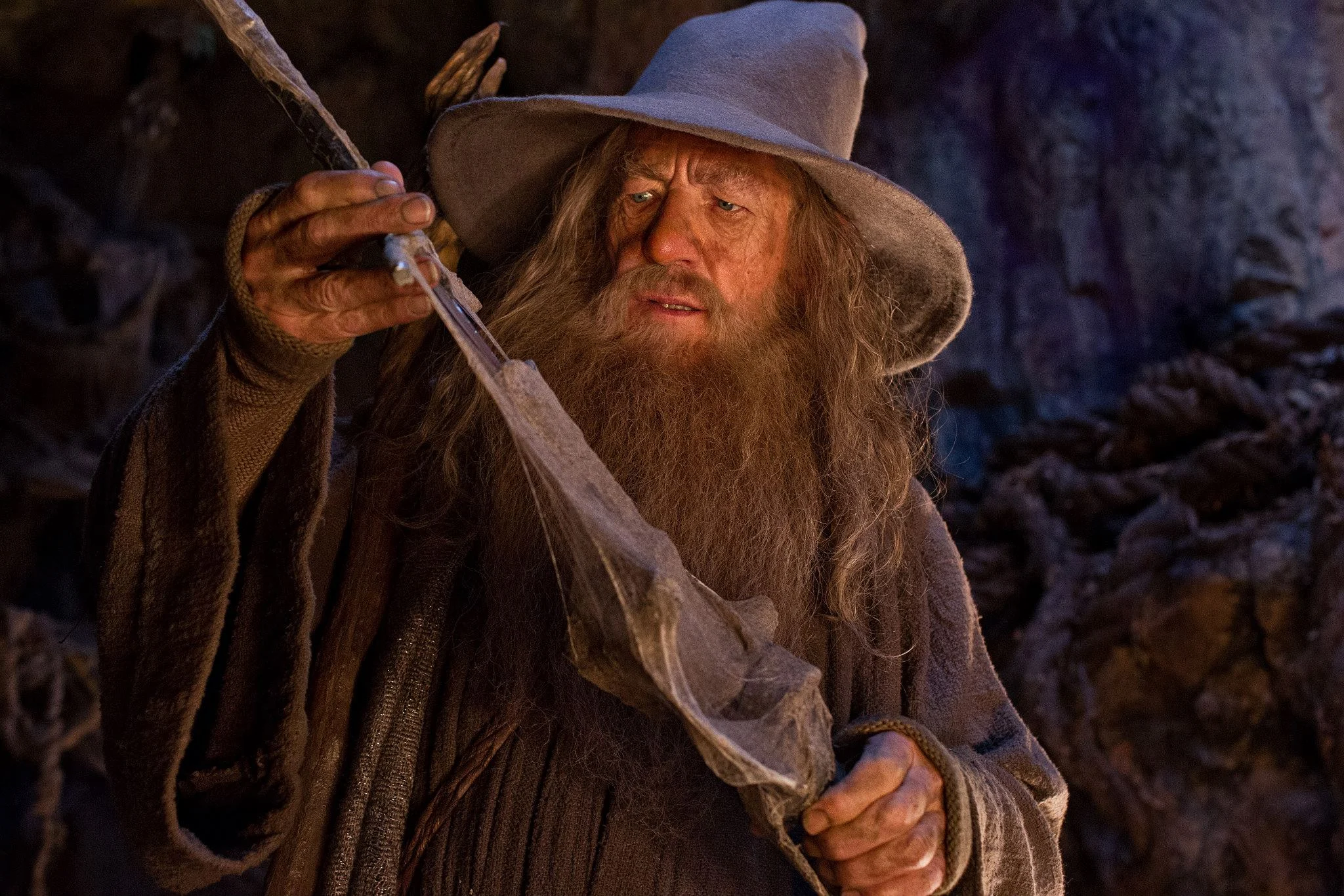
En mayo del año 2941 de la Tercera Edad, Gandalf, Bilbo Bolsón y un grupo de enanos se toparon con tres trolls en el Bosque de los Trolls: William, Berto y Tom. Los trolls capturaron a Bilbo y a los enanos, pero Gandalf los destruyó exponiéndolos a la luz del sol. Glamdring, junto con Orcrist y Dardo, fueron halladas en una cueva cercana. Gandalf reclamó el arma como suya, asombrado por su aspecto y su inscripción. La inscripción estaba escrita en un alfabeto rúnico que Gandalf desconocía; para descifrarla, necesitó los conocimientos de Elrond. Elrond tradujo las runas y la llamó por su nombre humano: «Martillo del Enemigo».
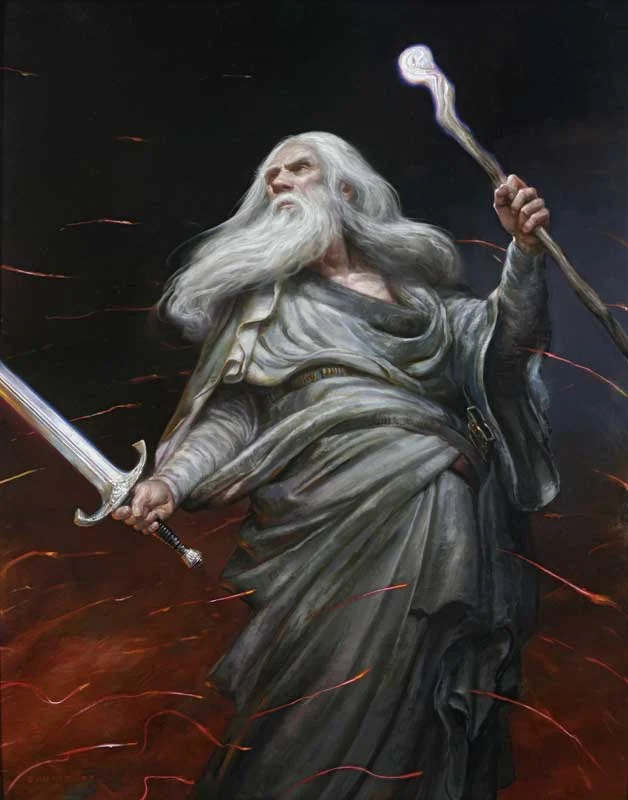
Gandalf sabía manejar bien la espada; su primera víctima fue el Gran Trasgo. Otros Orcos huyeron al reconocer la espada como «Demoledora». Esto significaba que tenían leyendas sobre dos espadas resplandecientes: «Demoledora» y «Mordedora». No se sabe con certeza si Gandalf volvió a utilizar la espada durante la Incursión a Erebor, aunque es probable que la empuñara en la Batalla de los Cinco Ejércitos.
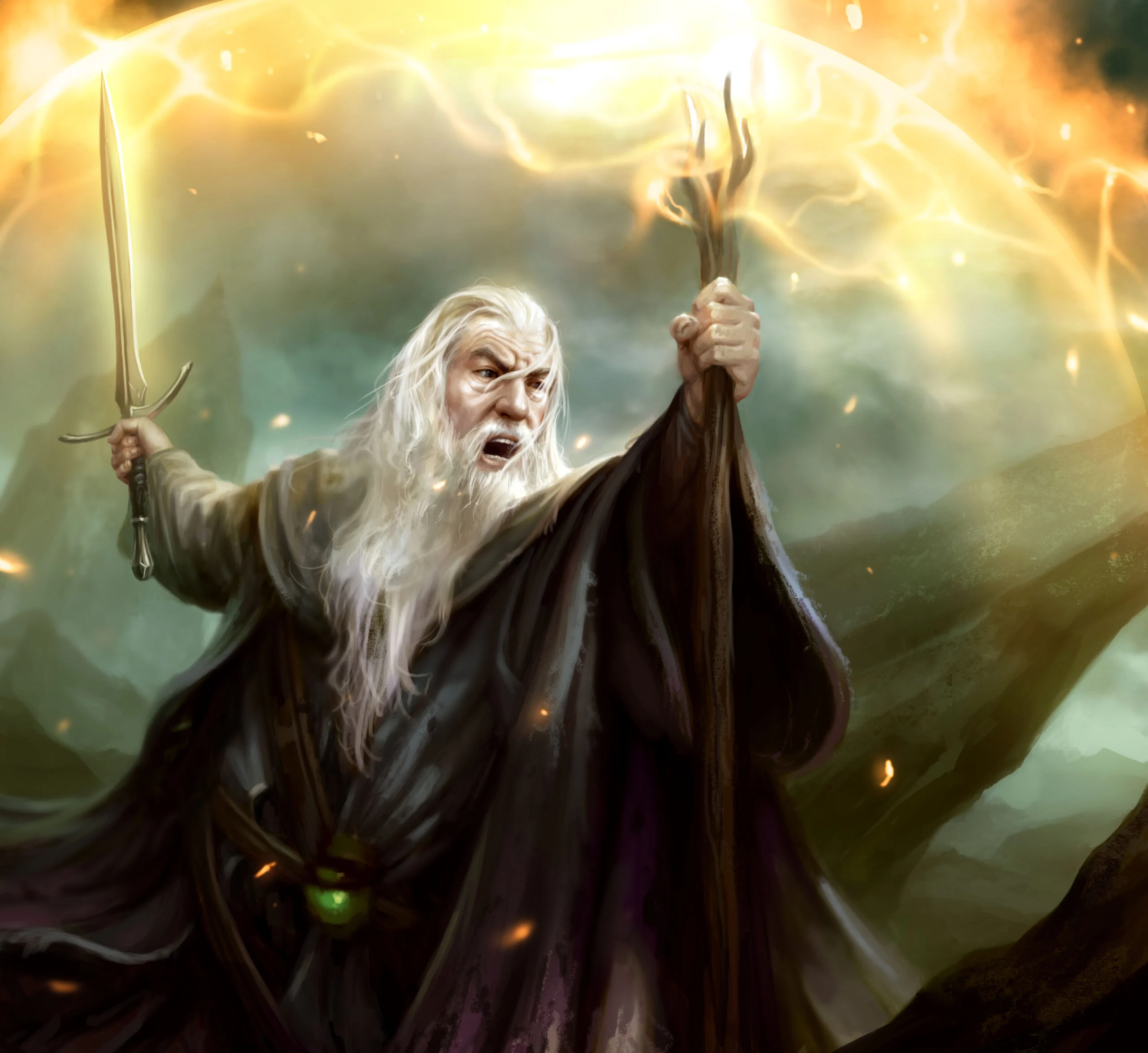
Gandalf llevaba Glamdring a su lado cuando la Comunidad del Anillo partió de Rivendel en el año 3018 de la Tercera Edad. Utilizó la espada durante la batalla de la Cámara de Mazarbul y, poco después, en el enfrentamiento con el Balrog, batalla en la que su bastón quedó destruido. Tras el derrumbe del puente, Gandalf y el Balrog continuaron luchando hasta la Escalera Interminable y la Torre de Durin, siendo Glamdring la única arma de la que se sabe que Gandalf disponía.
El cuerpo de Gandalf pereció allí, pero fue enviado de vuelta porque su misión aún no había concluido. Llevaba consigo a Glamdring cuando se encontró con los Tres Cazadores; se la entregó a Háma en Edoras cuando le pidieron que la entregara. Gandalf seguiría portándola durante toda la Guerra del Anillo, y la llevaba a su lado cuando él, Frodo, Sam, Merry y Pippin llegaron al «Poney Pisador» en Bree. Gandalf y los hobbits habían sido testigos de tanta guerra por entonces que llevar un arma no les parecía extraño.
Destino
El 29 de septiembre del año 3021 de la Tercera Edad, Gandalf abandonó la Tierra Media y zarpó hacia el Oeste. Nunca se menciona si se llevó a Glamdring consigo, por lo que es objeto de debate. Se puede argumentar que la llevó consigo al otro lado del Mar, al igual que hizo con Sombragrís, o que la dejó atrás en la Tierra Media, ya que en las Tierras Imperecederas no se necesitan armas.
Apariencia
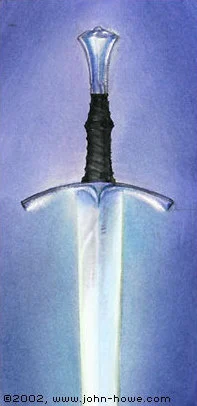
Se describe que Glamdring y Orcrist tenían «hermosas vainas y empuñaduras enjoyadas». Brillaban con un resplandor azul en presencia de los orcos. La «espada de Turgon» era «una espada blanca y dorada con una vaina de hueso de ruel (marfil)».
Cuando tomó la espada, Gandalf dijo que no podía leer las runas. Elrond, sin embargo, sí pudo, ya que era un experto en todo tipo de runas.
Etimología
Glamdring significa «Martillo del Enemigo» en Sindarin. Se forma a partir de los elementos: glam, que literalmente significa «grito, ruido confuso», pero que se utiliza para referirse a cualquier grupo de Orcos; y dring («golpear, dar un golpe»).
Los orcos también le dieron a la espada el nombre despectivo de «Demoledora».
Otras versiones del legendarium
En 1960, Tolkien comenzó una reescritura completa de *El hobbit*, añadiendo el detalle de que Glamdring estaba cubierta de sangre oscura cuando Gandalf la encontró, lo que explicaba por qué las runas eran ilegibles hasta que Elrond la limpió.
En la versión publicada de *El Hobbit* no se explica por qué Gandalf no podía leer las runas. Una explicación adecuada serían las «runas de Gondolin», ideadas por Tolkien en 1924 o 1930. Este conjunto de runas se publicó por primera vez en 1992.
Representación en las adaptaciones
Películas
1977: El hobbit (película de 1977):
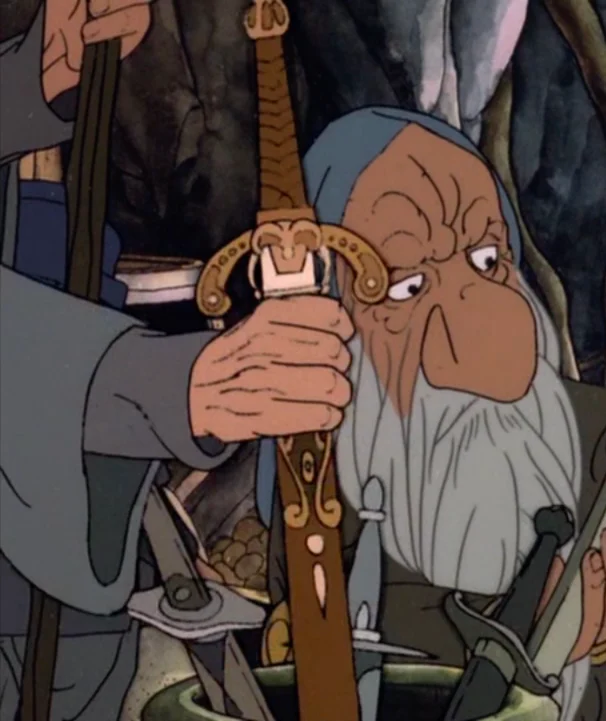
Gandalf se hace con Glamdring en la cueva de los trolls. Elrond reconoce la espada a primera vista; tal vez simplemente deduzca que se trata de Glamdring porque acababa de identificar a su compañera, Orcrist. Tras abandonar Rivendel, Gandalf solo utiliza la espada, cabe destacar, para rescatar a Bilbo y a los Enanos de la Ciudad de los Trasgos.
1978: El Señor de los Anillos (película de 1978):
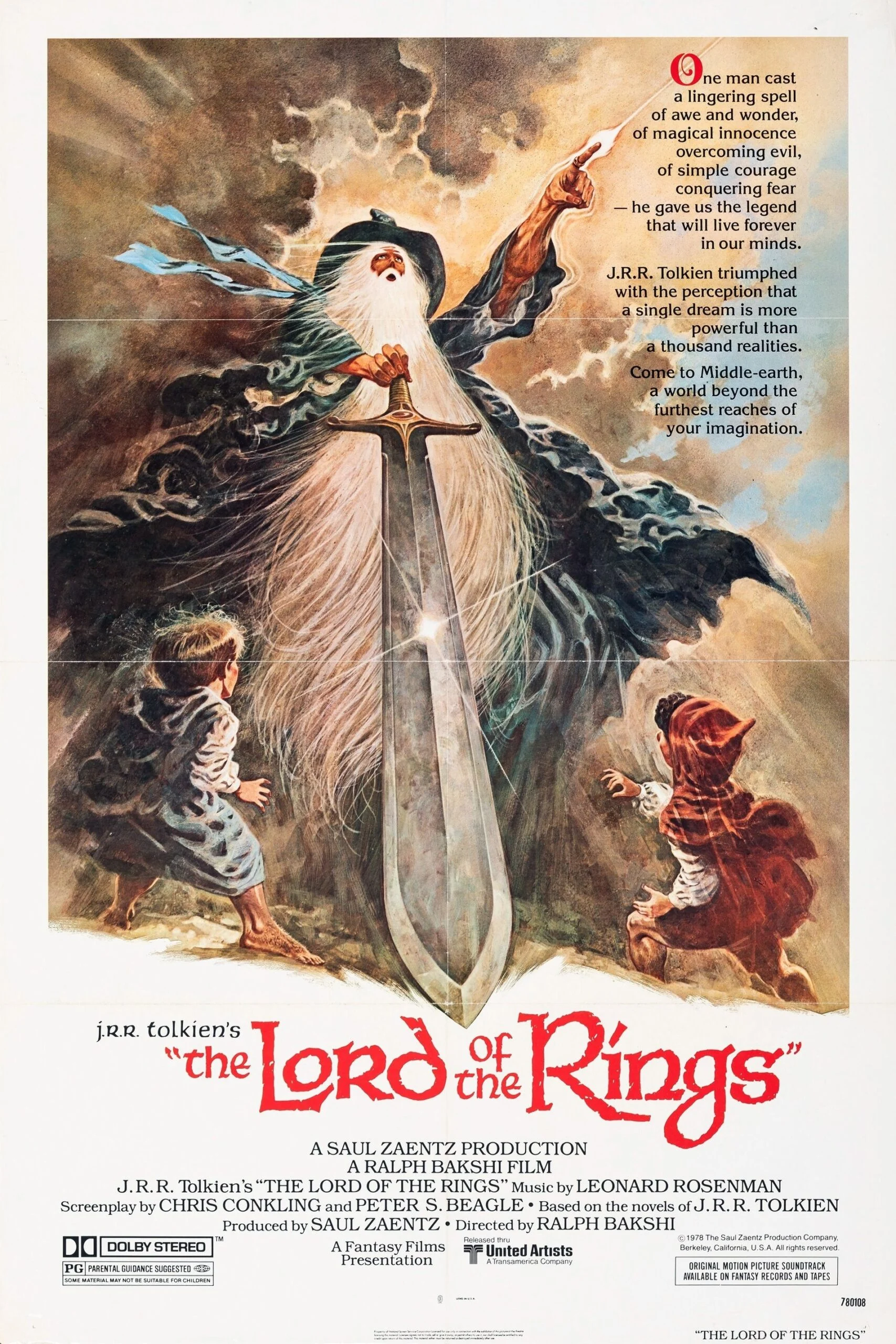
En el material promocional, Glamdring aparece representada como una espada larga corriente, sin ninguna inscripción visible. En la propia película, no se le da nombre y es considerablemente más corta, siendo solo una espada de una mano. Curiosamente, se rompe junto con la espada del Balrog, pero reaparece intacta en escenas posteriores.
1980: El retorno del rey (película de 1980):
Gandalf no utiliza una espada, sino únicamente su bastón.
Marzo de 2001: El Señor de los Anillos (trilogía cinematográfica):
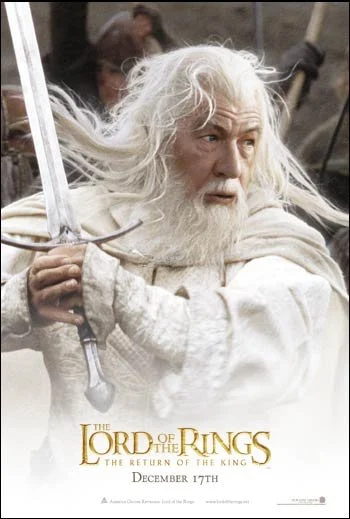
«Glamdring» es el nombre que se le dio a la espada de Gandalf en los materiales promocionales de la película, pero en las películas no se menciona su nombre. La espada mide, según la mayoría de las réplicas, 47 pulgadas (aproximadamente 120 centímetros) de largo y no brilla con luz azul. Cuando se les preguntó al respecto, Peter Jackson y Philippa Boyens respondieron en tono de broma que se debía a «recortes presupuestarios» y que «no les quedaba suficiente azul».
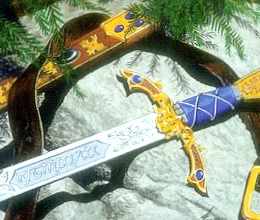
En las películas, Glamdring se representa como un arma tipo espada larga. Tiene una hoja recta de doble filo con un ricasso muy corto justo encima de la guarda. Las puntas de la guarda se abren hacia arriba, y en el centro de la misma hay una gema azul decorativa. La empuñadura de la espada está envuelta en azul, y el pomo es alargado, ensanchándose en la parte inferior. La inscripción rúnica está grabada en la guarda y confiere poder a la espada. Gracias a este poder adicional, Gandalf fue capaz de derrotar al Daño de Durin. La inscripción real reza así:
«Turgon Aran- Gondolin, forjó en su taller la espada Glamdring, de buena fama, llamada Glamhoth».
Esto es Sindarin y se traduce como «Turgon, rey de Gondolin, empuña, posee y sostiene la espada Glamdring, enemiga del reino de Morgoth, martillo de los Orcos».
2012: El hobbit: un viaje inesperado:
Thorin encuentra varias espadas en los tesoros de los trolls y le da una a Gandalf. En Rivendel, Elrond la identifica como Glamdring, y en la Ciudad de los Goblins, el Gran Trasgo la reconoce como «Demoledora». Tiene el mismo diseño que Glamdring en las películas de El Señor de los Anillos.
Serie de radio
1968: El hobbit (serie radiofónica de 1968):
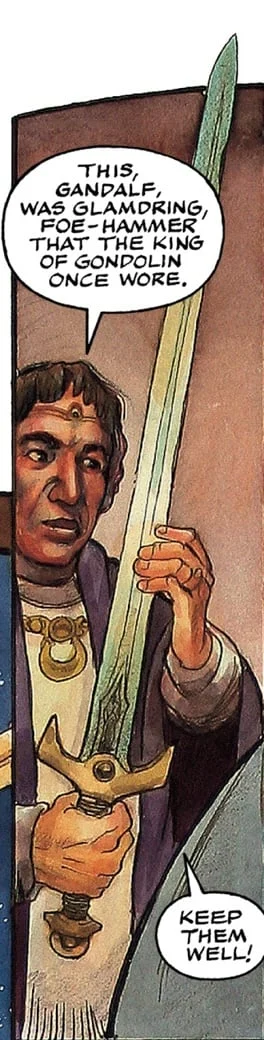
Glamdring se encuentra en la cueva de los Trolls, y más tarde recibe su nombre de manos de Elrond. El propio Gandalf relata cómo en su día la empuñó el rey de Gondolin.
1981: El Señor de los Anillos (serie radiofónica de 1981):
Glamdring no aparece nombrada, y la presencia de una espada solo se menciona una vez: cuando Gandalf tiene que entregársela a Háma.
Juegos
2002: El Señor de los Anillos: La Comunidad del Anillo (videojuego):
Glamdring es una espada larga élfica. Brilla con una luz pálida cuando hay enemigos cerca.
2003: El Hobbit (videojuego de 2003):
Dado que este juego se centra en Bilbo más que en todo el grupo, nunca se menciona a Glamdring por su nombre, y solo aparece una vez, cuando Gandalf y el jugador (en el papel de Bilbo) tienen que defenderse de varios Trasgos en las Montanas Nubladas. También se ofrece una teoría alternativa sobre su supervivencia: las cuevas del Bosque de los Trolls fueron —según Glóin— excavadas por el Rey Brujo de Angmar durante su reinado en la Region.
Referencias
1. Esta ficha se ha importado inicialmente de TolkienGateway.net el día 26/05/2026.