
Thorin
Thorin Ii, también conocido como Thorin Escudo de Roble, fue rey del Pueblo de Durin desde el año 2850 de la Tercera Edad hasta su muerte en el año 2941 de la Tercera Edad; era hijo de Thráin II, nieto de Thrór y hermano mayor de Frerin y Dís. Thorin lideró Pueblo de Durin de las Montañas Azules durante su exilio. En el año 2941 de la Tercera Edad, encabezó la expedición a Erebor acompañado de doce enanos, Bilbo Bolsón y Gandalf el Gris; se convirtió brevemente en rey bajo la montaña hasta que pereció tras la Batalla de los Cinco Ejércitos.
Historia
Juventud y exilio
Thorin nació en el año 2746 de la Tercera Edad, presumiblemente en la Montaña Solitaria, donde su abuelo, Thrór, era Rey Bajo la Montaña. Thorin aún era un joven (de unos 24 años, según el Cómputo de los Reyes de los Enanos) cuando el dragón Smaug descendió en llamas sobre la montaña de Erebor. Smaug dejó la ciudad humana del Valle de Dale en ruinas y mató a muchos Enanos que se encontraban dentro de la Montaña. Thrór y Thráin (el padre de Thorin) escaparon por una Puerta Trasera secreta. Por su parte, Thorin fue uno de los pocos Enanos que no se encontraban dentro de la Montaña en ese momento. Así, los Los enanos de Erebor supervivientes se vieron obligados al exilio, y Thrór, Thráin y Thorin huyeron hacia el sur y acabaron en las Tierras Brunas.
La Guerra de los Enanos y los Orcos
Desilusionado, el abuelo de Thorin, Thrór, vagó hasta la puerta oriental de Moria, la antigua morada de los Barbiluengos, ahora infestada de Orcos. Entró en ella y acabó asesinado y profanado por el orco Azog. Estas noticias las llevó su compañero Nár a Thráin, con lo que comenzó La Guerra de los Enanos y los Orcos.
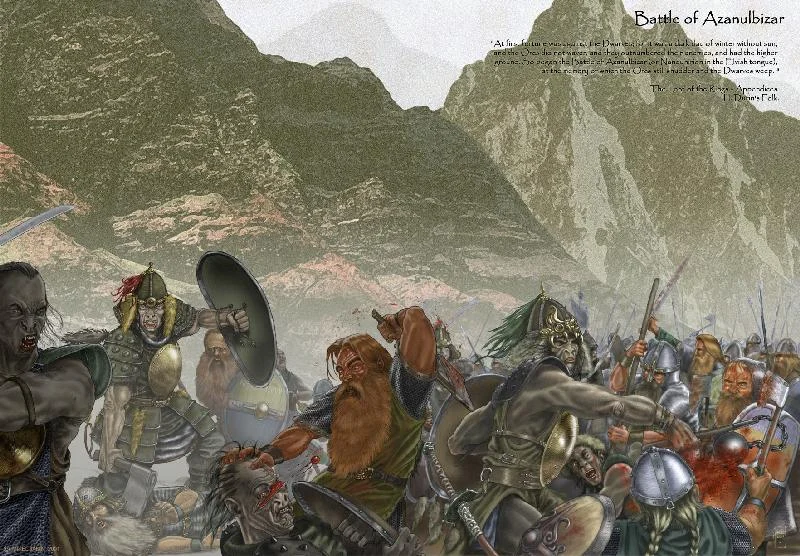
La Guerra entre ambas razas fue larga y encarnizada, y terminó finalmente con una victoria pírrica de los enanos en la Batalla de Azanulbizar, en el año 2799 de la Tercera Edad. Tanto Thráin como Thorin resultaron heridos durante esta batalla y Frerin (el hermano de Thorin) murió. Cuando se le rompió el escudo, cortó una rama de un roble para bloquear los golpes de sus enemigos. A pesar de la victoria, ningún enano se atrevió a volver a entrar en Moria por miedo al Daño de Durin .
En memoria de ello, Thorin juró llevar siempre un escudo sencillo de roble, sin ningún emblema, hasta que fuera aclamado rey, y así se ganó el sobrenombre de Escudo de Roble.
Regreso al exilio
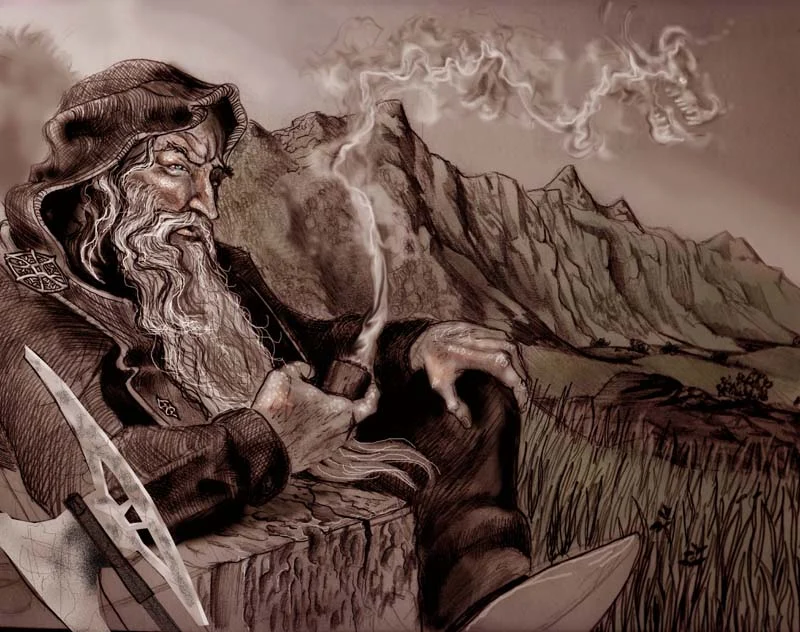
Thráin, Thorin y los demás supervivientes del Pueblo de Durin abandonaron Azanulbizar y regresaron a las Tierras Brunas. Sin embargo, pronto comenzaron a vagar por Eriador antes de establecerse por fin en las Montañas Azules. Allí prosperaron a su manera, forjando objetos de hierro y aumentando su número (aunque, debido a la escasez de mujeres enanas, muy lentamente, y gracias a la llegada de Barbiluengos errantes que se enteraron de su morada). No obstante, todos seguían anhelando regresar a la Montaña Solitaria.
Para entonces, Thráin estaba en posesión del último de los Siete Anillos de Poder. Es posible que, a medida que crecía el poder de Sauron, también lo hiciera la influencia del anillo sobre Thráin. Su ardiente deseo por el oro y por regresar a la Montaña Solitaria se volvió demasiado grande y, en el año 2841 de la Tercera Edad, partió para regresar. Thorin, que entonces tenía noventa y cinco años, nunca volvería a ver a su padre, ya que Sauron capturó y encarceló a Thráin en Dol Guldur. Así fue como, en torno a la desaparición y muerte de Thráin (Tercera Edad 2850), Thorin se convirtió en el Rey del Pueblo de Durin. Thorin y su pueblo vivían felices en las Montañas Azules y en Eriador, pero a medida que pasaban los años, el deseo de Thorin de regresar a Erebor iba en aumento.
La expedición a Erebor
Una nueva esperanza
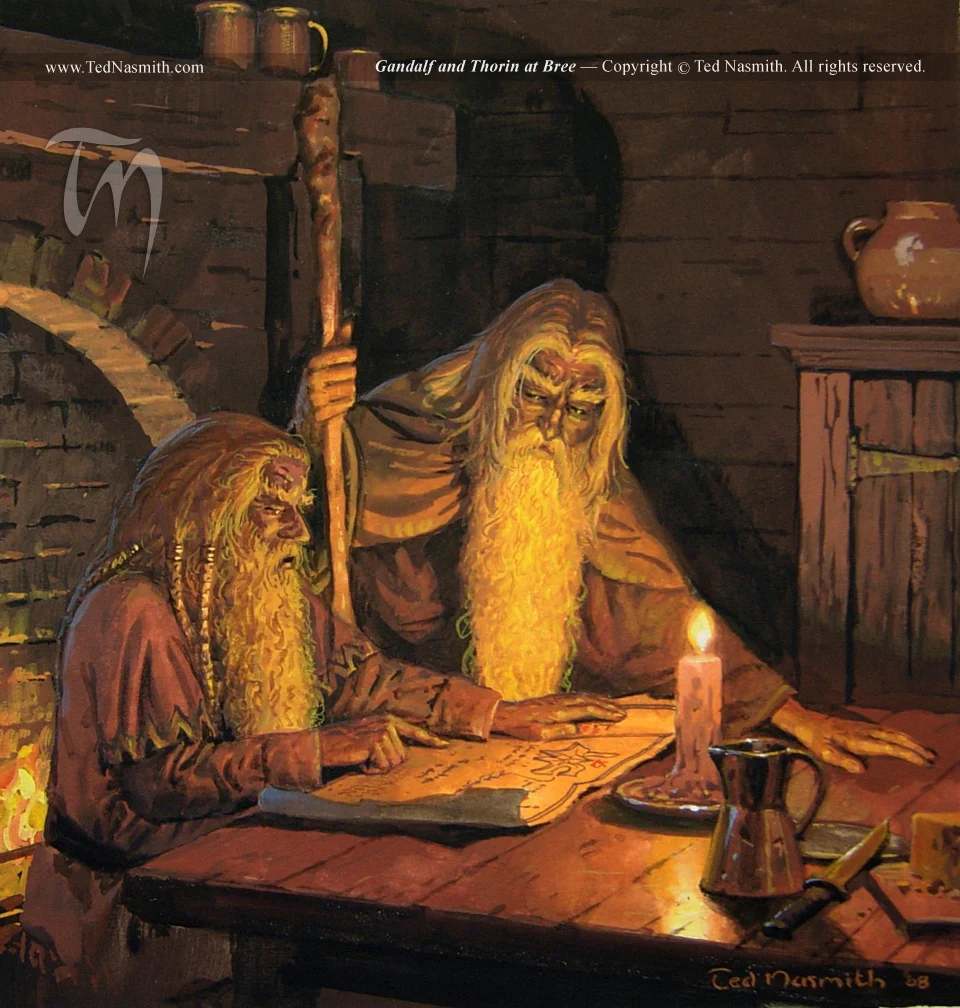
La suerte de la Casa de Durin cambió cuando Thorin se encontró por casualidad con Gandalf en el año 2941 de la Tercera Edad. A continuación, se dirigieron a Las Salas de Thorin I . Allí intercambiaron sus historias y Gandalf ideó un plan. Gandalf sabía que Sauron podría haber utilizado a Smaug con efectos devastadores. Por lo tanto, tanto él como Thorin tenían un interés común en acabar con Smaug. Gandalf quería que Thorin y una compañía de enanos viajaran a la Montaña Solitaria llevándose consigo a Bilbo Bolsón. El instinto de Gandalf le decía que la expedición a Erebor solo tendría éxito si Bilbo los acompañaba.
Por ello, Gandalf invitó a Thorin y a los demás enanos a Hobbiton, en La Comarca, y les indicó que buscaran una madriguera cuya puerta estuviera marcada con el símbolo del ladrón (pues a los enanos se les había metido en la cabeza que Bilbo era un ladrón). Así, Thorin se encontró en Bolsón Cerrado, donde disfrutaron de la hospitalidad del hobbit. Sin embargo, Thorin y los enanos no estaban convencidos; no fue hasta que Gandalf reveló El mapa de Thrór y la llave cuando Thorin se convenció de que la aventura le resultaría provechosa. Incluso después de la «Fiesta Inesperada», Gandalf solo logró convencer a Thorin de que llevara a Bilbo la misma mañana en que partieron.
Así fue como, en el año 2941 de la Tercera Edad, Thorin partió hacia la Montaña Solitaria con Gandalf, Bilbo Bolsón, Fíli, Kíli, Balin, Dwalin, Dori, Nori, Ori, Óin, Glóin, Bifur, Bofur y Bombur. Al poco tiempo de iniciar el viaje, los aventureros encontraron la cueva de un Troll. Allí descubrieron un tesoro que incluía espadas forjadas en la antigua ciudad de Gondolin. Bilbo encontró un cuchillo al que llamó Dardo; Gandalf se hizo con Glamdring y, por su parte, Thorin encontró Orcrist. Mientras Thorin y Compañía se encontraban en Rivendel, Elrond leyó las inscripciones de las espadas y les contó la historia de cada una de ellas. También leyó las Letras Lunares del mapa de Thrór; decían: «Quédate junto a la piedra gris cuando el zorzal llame [...] y el sol poniente, con la última luz del Día de Durin brillará sobre la cerradura».
El regreso del Rey bajo la Montaña
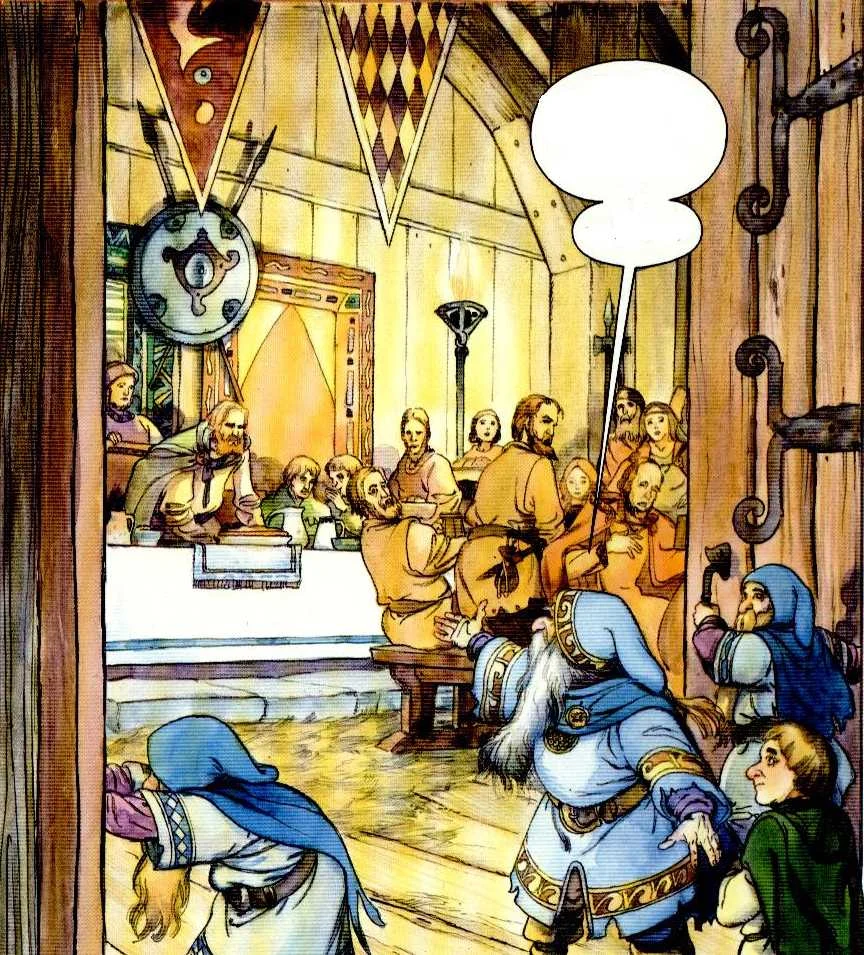
Al llegar a Esgaroth, el asentamiento más cercano a la Montaña Solitaria, Thorin fue recibido calurosamente y los hombres de Ciudad del Lago aclamaron el regreso del Rey bajo la Montaña. Pronto llegaron a la propia Montaña Solitaria y, «con la última luz del Día de Durin», encontraron la Puerta Lateral secreta y la abrieron con la llave. Thorin envió a Bilbo al interior para que cumpliera con su deber como su «estimado ladrón». Esto enfureció a Smaug, que intentó acabar con el ladrón y vengarse de los hombres del Lago. El dragón fue abatido por Bard, quien atravesó con una flecha negra un punto sin blindaje situado en la parte inferior del dragón.
Al enterarse de la muerte de Smaug, Thorin fortificó la entrada principal de la Montaña. Ejércitos de Elfos de los Bosques y hombres del lago se acercaron a la Montaña, liderados por el Rey de los Elfos y Bard, respectivamente. Thorin se negó a considerar la reclamación de Bard de una parte del tesoro hasta que el ejército élfico se hubiera retirado. Al negarse a expulsar a los elfos, Bard declaró que la montaña estaba en Sitio hasta que Thorin les entregara su parte del tesoro. Entonces, Thorin mandó llamar a su primo, Dáin Pie de Hierro, quien trajo a más de quinientos enanos de las Colinas de Hierro. Bilbo intentó poner fin a la disputa; con este fin, entregó en secreto la Piedra del Arca a Bard y al Rey de los Elfos para que la utilizaran a la hora de llegar a un acuerdo con Thorin. Cuando Thorin se enteró de las acciones de Bilbo, se enfureció y lo expulsó de la compañía.
Muerte
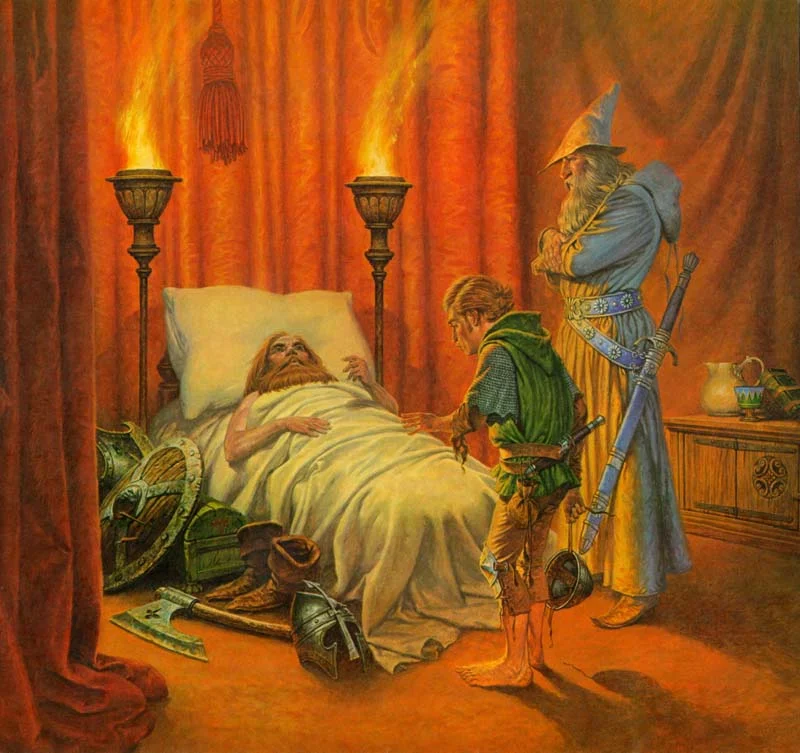
Sin embargo, todas las disputas quedaron relegadas a un segundo plano cuando el ejército de Bolgo, hijo de Azog, atacó de improviso. Así, los tres ejércitos de Elfos, Hombres y Enanos se unieron contra los dos ejércitos de Trasgos y Huargos: la Batalla de los Cinco Ejércitos había comenzado. A medida que la batalla se prolongaba, Thorin saltó desde la puerta principal y reunió a su alrededor a todos los Elfos, Hombres y Enanos. Los ejércitos de los Pueblos Libres de la Tierra Media salieron triunfantes. No obstante, Kíli y Fíli murieron y Thorin resultó gravemente herido. En su lecho de muerte, Thorin pidió perdón a Bilbo por sus palabras y actos airados. Elogió su buen carácter, su valentía y su amistad, diciendo que «si más de los nuestros valoráramos la comida, la alegría y el canto por encima del oro atesorado, este sería un mundo más alegre». Con esas palabras, falleció. Fue enterrado en lo más profundo de la Montaña Solitaria. Bard de Valle colocó la Piedra del Arca sobre el pecho de Thorin, mientras que el Rey de los Elfos depositó Orcrist sobre su tumba.
Características
Apariencia
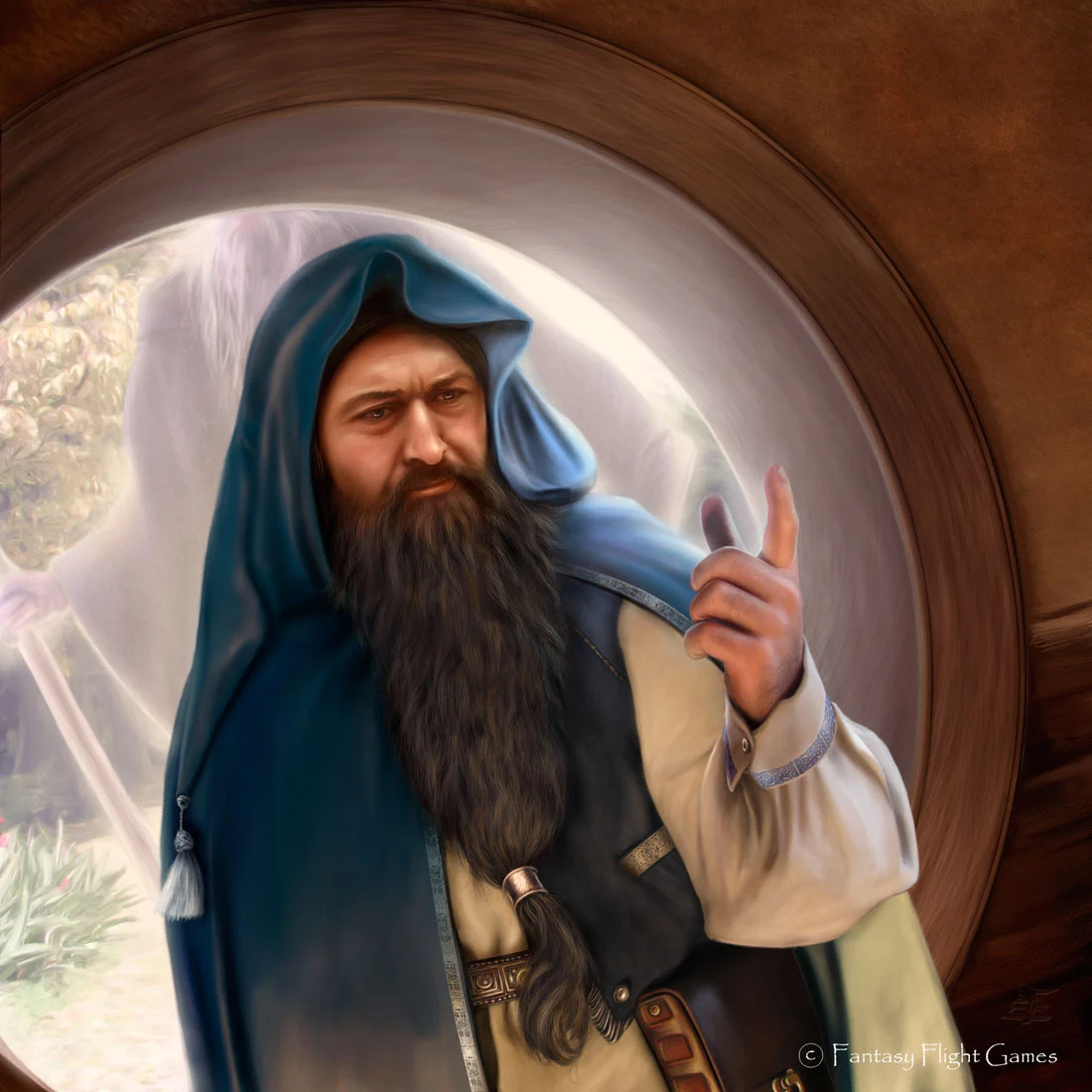
Thorin tenía una barba blanca y llevaba una capucha azul cielo con una larga borla plateada. Alrededor del cuello llevaba una cadena de oro, de la que colgaba la llave de su abuelo. Llevaba un cinturón de oro y joyas, y sus medias eran amarillas. También se decía que era bastante alto para ser un enano, aunque su estatura era insignificante en comparación con la de otras razas.
Personalidad
Thorin podía mostrarse obstinado, orgulloso y codicioso. Según Gandalf, desde el principio se mostró desdeñoso ante la idea de que Bilbo le acompañara en su tan ansiada aventura a la Montaña Solitaria; pensaba que Gandalf intentaba burlarse de él y hacerle quedar en ridículo. De hecho, a Thorin le resultaba muy difícil aceptar los consejos de Gandalf, ya que creía que debería estar trazando planes de guerra y batalla en lugar de pensar en utilizar a un hobbit como ladrón. Poco a poco fue respetando el valor que el hobbit aportaba a su misión, a medida que Bilbo demostraba una y otra vez su sigilo y su valentía. El tesoro más codiciado por Thorin era la Piedra del Arca, algo que Bilbo creía que no solo era el corazón de la Montaña, sino también el corazón del propio Thorin.
Otra de sus características distintivas era que, en ocasiones importantes, solía «no decir a nadie allí nada que no se supiera ya». En una ocasión, por ejemplo, se refirió a Fíli y Kíli como «hijos de la hija de mi padre» en lugar de «sobrinos» o «hijos de mi hermana».
Armas
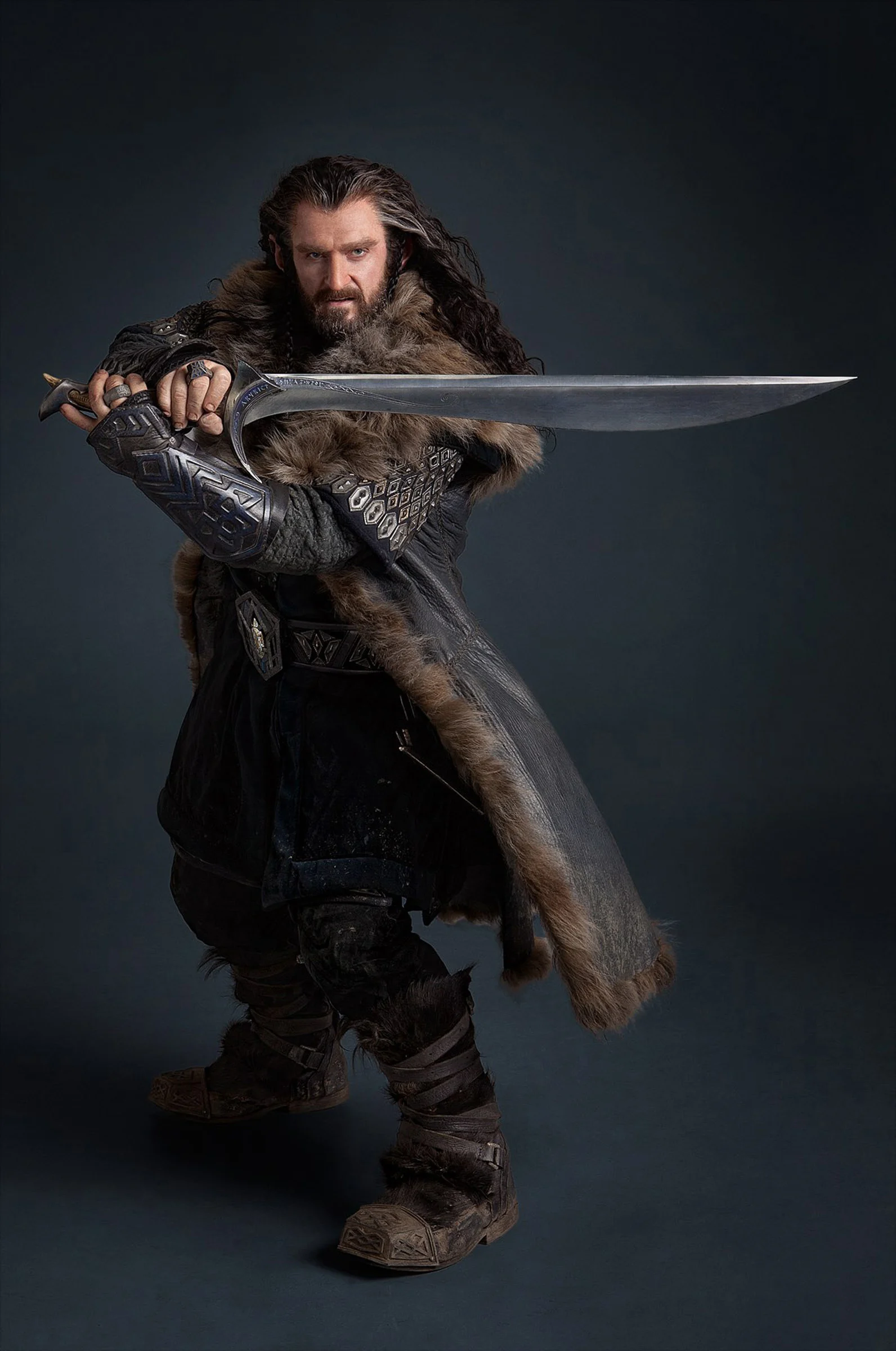
Thorin era un formidable espadachín y arquero, además de un hábil líder militar, capaz de reunir a Hombres, Elfos y Enanos a su lado en la Batalla de los Cinco Ejércitos. Era el dueño de la espada élfica conocida como Orcrist, «la Desolladora de Trasgos», una espada legendaria de Gondolin de la que se decía que había matado a cientos de Trasgos. Cuando había orcos o Trasgos cerca, brillaba con un resplandor azul. Utilizó esta espada durante toda la expedición a Erebor, pero se la arrebataron cuando fue capturado en el Bosque Negro. Más tarde, tras su muerte, fue depositada sobre su tumba para advertir a Erebor de cualquier fuerza oscura que se atreviera a intentar apoderarse de la Montaña.
Etimología
El nombre de Thorin procede del Dvergatal. Significa «Audaz».
El epíteto «Escudo de Roble» también procede del Dvergatal. Eikinskjaldi significa «Escudo de Roble», y desde hace tiempo se ha considerado el nombre de un enano. Sin embargo, dado que el nombre aparece dos veces, tanto en el linaje de Dúrinn como en el de Dválinn, también se ha sugerido que simplemente significa «con un escudo de roble».
Inspiración
Al igual que muchos nombres enanos, tanto Þorinn como Eikinskjaldi aparecen en el poema nórdico Völuspá, pero allí son los nombres de dos enanos distintos.
Los aficionados han especulado con que Tolkien podría haberse inspirado en una balada feroesa, «Regin Smiður», en la que Sigurd utiliza una rama de roble como arma:
Otras versiones del legendarium
En los primeros manuscritos de El hobbit, Tolkien utilizó el nombre de Gandalf para el personaje que más tarde se llamaría «Thorin Oakenshield» en las obras publicadas.
La afirmación de que Thráin II y su hijo Thorin Ii se establecieron al sur de Ered Luin, más allá de la Comarca, en el año 2802 se añadió a la entrada correspondiente al año 2799 de la Tercera Edad en el Apéndice B de la segunda edición de El Señor de los Anillos.
Representación en las adaptaciones
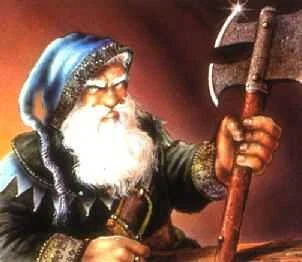
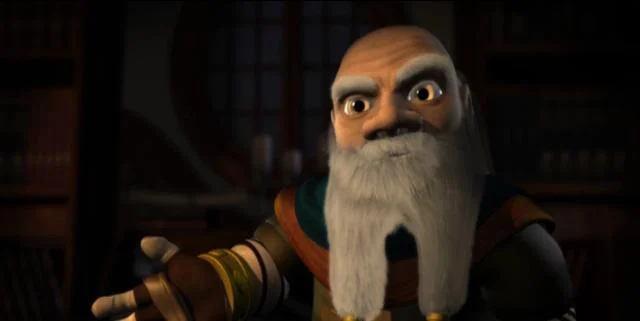
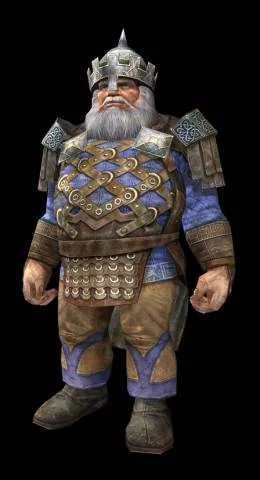
Películas
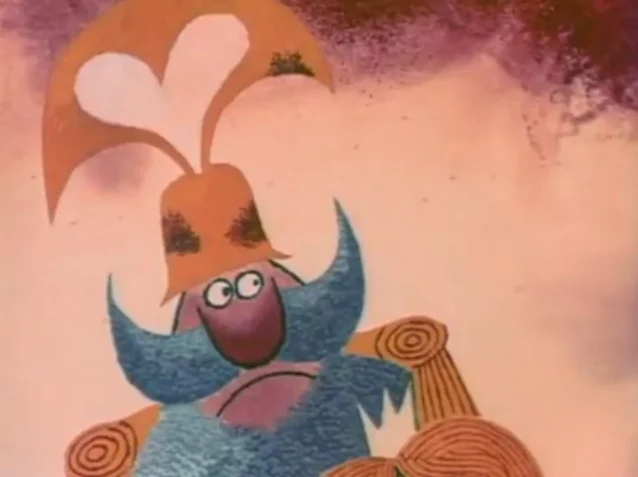
1967: El hobbit (película de 1967):
Thorin Escudo de Roble es el comandante de la guarnición del Valle. No es de sangre real.
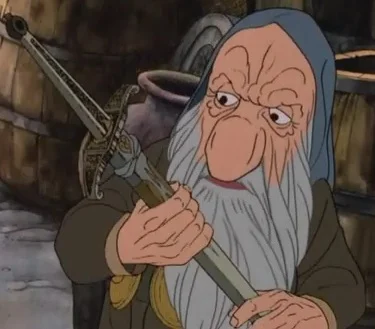
1977: El hobbit (película de 1977):
La voz de Thorin la pone Hans Conried. En lugar de permanecer en Erebor hasta que la Batalla de los Cinco Ejércitos estuviera a punto de perderse, salió con sus compañeros para unirse a los enanos de las Colinas de Hierro y enfrentarse a los ejércitos aliados del Bosque Negro y la Ciudad del Lago. Al presenciar la llegada del ejército de los lobos-duendes, Thorin se dirige de repente al rey elfo en términos amistosos. A continuación, ambos unen sus fuerzas con Bard y luchan durante toda la batalla que sigue.
2012: El hobbit: un viaje inesperado:
Thorin fue interpretado por Richard Armitage. A diferencia de muchas otras adaptaciones en las que se representa a Thorin con el pelo blanco, aquí se le muestra con un aspecto más joven (en el libro original era el más anciano de los enanos de la Compañía; en las películas parece situarse más o menos en el medio de los trece en cuanto a edad). Sin embargo, Thorin sí tiene algunas canas entre su cabello negro.
En el prólogo, que se remonta al Saqueo de Erebor, se muestra a Thorin como un líder nato, y se angustia cuando Thranduil y su ejército no acuden en ayuda de los Enanos. Más tarde, durante un flashback de la Batalla de Azanulbizar (denominada «Batalla de Moria» en estas películas), su liderazgo innato vuelve a quedar patente al animar a las tropas tras mutilar a Azog el Profanador (Dáin Pie de Hierro, quien mató a Azog durante esta batalla en el libro, no aparece en absoluto).
Thorin llega a Bolsón Cerrado más tarde de lo esperado. Se muestra totalmente escéptico ante la elección de Gandalf de Bilbo como decimocuarto miembro de la Compañía, pero el hobbit finalmente se gana su aprobación tras intentar salvarlo de Azog y su manada de orcos. Tras esta dura prueba, Gandalf lo revive en Carroca.
Antes de hacerse con Orcrist, Thorin empuñaba una espada enana llamada «Inmortales».
2013: El hobbit: La desolación de Smaug:
Thorin es capturado por los elfos del Bosque Negro junto con el resto de los enanos. Se niega a negociar con Thranduil para que los libere a todos, ya que aún le guarda rencor al rey elfo por no haber ayudado a su pueblo mientras Smaug destruía su hogar.
Después de que los enanos fueran sorprendidos intentando robar armas de la armería de Ciudad del Lago, Thorin prometió al pueblo una parte del tesoro si se permitía a la Compañía recuperar su reino. Tras la audiencia de Bilbo con Smaug, lidera a los Enanos en una batalla con el objetivo de derrotar al dragón ahogándolo en oro fundido. Sin embargo, el plan fracasa y, en su lugar, Smaug se dirige furioso hacia Ciudad del Lago.
2014: El hobbit: La Batalla de los Cinco Ejércitos:
Mientras busca la Piedra del Arca entre el tesoro escondido en el interior de La Montaña, Thorin cae cada vez más presa de la enfermedad del dragón. Empieza a sufrir paranoias, creyendo que los demás Enanos están conspirando contra él. Ordena a los demás Enanos que levanten barricadas para impedir que nadie más entre en La Montaña, incluso cuando ya ha comenzado la Batalla de los Cinco Ejércitos. Finalmente, supera su enfermedad y recobra el sentido común, liderando a los miembros de la Compañía en la Batalla.
En Colina del Cuervo, intenta acabar con el líder del ejército de orcos, su viejo enemigo Azog (con la ayuda de Fíli, Kíli y Dwalin). Tras la muerte de sus sobrinos, Thorin se enfrenta cara a cara al Orco Pálido (y, de paso, recupera Orcrist de manos de Legolas). Consigue que Azog caiga en un lago helado, pero el orco lo apuñala a través del hielo y lo hiere de muerte. Con sus últimas fuerzas, Thorin clava Orcrist en el pecho de Azog, matándolo por fin. Poco después, justo antes de sucumbir a sus heridas, se reconcilia con Bilbo y muere allí mismo, en el lago.
Serie de radio
1968: El hobbit (serie radiofónica de 1968):
La voz de Thorin la pone John Justin.
1979: El hobbit (serie radiofónica de 1979):
La voz de Thorin la pone Tom Luce.
1980: Der Hobbit (serie de radio alemana de 1980):
El papel de Thorin lo interpreta Heinz Schlacht.
1989: El Hobbit (serie de radio eslovaca de 1989):
La voz de Thorin la pone Ľubomír Roman.
Juegos
1982: El Hobbit (videojuego de 1982):
Thorin es el único compañero del jugador, Bilbo Bolsón.
2003: El Hobbit (videojuego de 2003):
La voz de Thorin la pone Clive Revill.
2007: El Señor de los Anillos Online:
Thorin no desempeña ningún papel en la trama principal, pero hace una breve aparición en un flashback que tiene lugar en el año 2941 de la Tercera Edad, justo antes de que la compañía emprenda su viaje hacia la Montaña Solitaria. Él, junto con sus sobrinos Fíli y Kíli, yace enterrado en Mazal Akrâz, la Cámara de la Gloria, en las profundidades de Erebor.
2014: Lego El Hobbit: El videojuego:
Thorin aparece tal y como se le ve en las películas, pero en forma de minifigura de LEGO. Su voz la pone Richard Armitage a partir de material de archivo de las dos primeras películas.
Referencias
1. Esta ficha se ha importado inicialmente de TolkienGateway.net el día 31/05/2026.